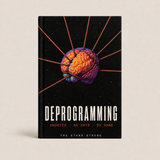
Fifty-eight cards, one a day — each names a part of a full life. A full life was never only about money: it’s energy, health, love, time, freedom and meaning too. Draw a card, feel what it names, and let the day catch up to it.
A full life was never only about money. It’s energy, health, love, time, freedom, and meaning too — and most of us only ever tend one of them.
The deck keeps all of them in front of you, one day at a time. Draw a card, feel what it names, and let the day catch up to it.
What’s inside
Six movements: the premise, the eight domains, the personality, the emotions, the mechanism, and the litany. Fifty-eight cards in all, plus two title cards.
A slim guide card explains how to draw. A weighted stand holds the day’s card where you’ll see it.
How to use it
Shuffle. Cut. Take one card — and don’t read it until you turn it over. The front names a part of a full life; the back gives you one quiet thing to feel. Hold it for a minute, then stand the card where you’ll pass it.
The Abundance Deck$55
The record
They became the person first.
They started where you are — the same book, a few quiet minutes a morning, sixty-six days. What shifted, shifted on the inside. These are their words.
MayaFinished the 66 days
I’ve started things before. This is the first one I didn’t quit. The small morning ritual holds me, not the other way around.
DevonFinished the 66 days
The needle was the thing. Watching one number climb, slowly, in my own handwriting — that’s what made it real.
PriyaSecond time through
I don’t reach for it because I should. Mornings feel unfinished without the sit now.
SamFinished the 66 days
Nothing overnight. Just a quieter start to the day, and a record I can turn back to on the days I doubt.
What readers say
4.9/ 5860 verified reviews
5786
468
36
20
10
Sort
HHeather MacLeod
ReviewingThe Abundance Deck
It gave me language for the mental load
I knew I was doing too much, but every time I tried to explain it I sounded like I was listing chores. The journal helped me notice the thinking behind the chores: remembering, anticipating, arranging, following up. Four stars because I wish there were a few more examples for people caring for both teens and parents, but the structure itself has been solid.
MMarcus Bennett
ReviewingThe Abundance Deck
I stopped asking my wife to manage my help
This one is from the other side. I was the guy saying 'tell me what you need.' I meant well. After using the journal for my own stress, I realized how much work that sentence was handing back to her. I started taking full ownership of a few family tasks instead of waiting for instructions. The journal didn't teach marriage advice. It helped me notice a pattern I had been missing.
CCatherine Young
ReviewingThe Abundance Deck
My family saw the tasks. I was carrying the consequences
Everyone could see that I drove my mom to appointments. Nobody saw the part where I spent the day before confirming transportation, medication lists, insurance questions and what to tell my boss. The journal helped me stop minimizing that invisible work because it wasn't 'physical.' By the time I got home I had already worked two jobs in my head.
KKendra Lewis
ReviewingThe Abundance Deck
I was tired of delegating my own exhaustion
When someone told me to 'just ask for help,' I wanted to laugh. Asking meant deciding what could be handed off, explaining it, reminding them, and checking that it happened. The journal helped me get more specific about what I actually needed: not helpers, but other adults who owned parts of the system. That shift started in writing before I could say it out loud.
EEvan Bouchard
ReviewingThe Abundance Deck
The evening audit showed me where the day was actually lost
I assumed work was what was draining me because that's where I spent the most hours. The nightly check kept showing that my worst stretch was 5:30 to 8:00, when every unfinished responsibility from two households arrived at once. Once I saw it clearly, I could stop trying to fix my mornings and start changing what happened in that window.
MMelanie Foster
ReviewingThe Abundance Deck
My sister's beach photo nearly broke me
I was sitting in a hospital waiting room with my dad for the third time that month when my sister posted vacation pictures. She lives three hours away and always says, 'let me know if you need anything.' I was so angry I could barely look at my phone. The journal let me write the ugly version without sending it to her. Then I could decide what I actually wanted to ask for.
AAndrew Campbell
ReviewingThe Abundance Deck
I finally admitted I resented being the responsible one
I have two brothers. Somehow I became the person who knows the doctors, prescriptions, bills and care schedule. I told myself I was doing it because I was capable. The journal helped me admit that underneath the competence was a lot of resentment. Seeing that didn't make me less loyal to my mom. It made me more honest about what this role costs.
VVanessa Price
ReviewingThe Abundance Deck
The heart emojis from my brother were making me angrier
Every update about Mom would get a 'thinking of you guys ❤️' from my brother while I was the one missing work and cleaning up after another bad night. I felt petty for hating those messages. The journal gave me a place to separate what I wished he would do from what he was actually willing to do. That made my next request much clearer.
CColin Fraser
ReviewingThe Abundance Deck
It didn't fix my siblings, which is probably the point
I still think the division of care in my family is wildly unfair. The journal did not make me suddenly peaceful about it. What it did was help me stop spending entire evenings replaying the same argument in my head. Four stars because some of the 'rehearse' work felt unnatural at first, but the practical daily action has been very useful.
RRenee Martin
ReviewingThe Abundance Deck
I stopped confusing capability with obligation
Because I'm the organized sibling, everyone assumed I should be the one to handle everything. I assumed it too. The journal kept bringing me back to the same question: just because I can carry something, does that automatically make it mine? That has changed how I say yes to family requests.
DDwayne Carter
ReviewingThe Abundance Deck
I had to see the resentment before I could set a boundary
I was trying to be the good son and the easy brother at the same time. That meant I never said how much I was doing until I exploded. The journal helped me catch the earlier stage, when I was still agreeing to things while already angry. I am much more interested now in saying a clean no than delivering a furious yes.
JJoelle Tremblay
ReviewingThe Abundance Deck
I was keeping the peace and losing mine
Family gatherings had become ridiculous. I would smile at siblings who hadn't called Dad in weeks, then go home and rage about it to my husband. The journal helped me notice that 'keeping the peace' had become a way of avoiding any direct conversation about the care load. I still choose my battles, but now it's actually a choice.
BBrandon Ellis
ReviewingThe Abundance Deck
I stopped waiting for fairness before taking care of myself
I spent a long time thinking I would feel better once my brother finally stepped up. He hasn't. The journal helped me see how much of my emotional state was waiting on someone else's behavior. I can still push for a fairer split without making my entire day depend on whether he responds.
MMichelle Levesque
ReviewingThe Abundance Deck
I could love my mother and hate the arrangement
I thought those two things cancelled each other out. If I resented the care situation, I assumed that meant I resented my mother as a person. The journal helped me separate the relationship from the workload. That distinction has reduced a lot of shame.
TTodd Avery
ReviewingThe Abundance Deck
The calendar showed who was actually showing up
My siblings all believed we were sharing the care. Once I started keeping a simple record of appointments, calls and visits, the reality was obvious. The journal wasn't built as a family spreadsheet, but the nightly audit made me much less likely to gaslight myself about how much I was carrying.
SSusan Parker
ReviewingThe Abundance Deck
Forgetting a word in a meeting scared me more than I admitted
I'm 51 and have always been sharp at work. During a presentation I blanked on a basic word and laughed it off, but afterward I sat in the bathroom wondering if something was seriously wrong with me. The journal helped me see how little sleep I was getting and how many decisions I was carrying before 9am. It didn't diagnose anything. It gave me a record that made the overload impossible to dismiss.
EEric Coleman
ReviewingThe Abundance Deck
I thought I was losing my edge
I run a small business and also handle most of my father's care. I started missing obvious details at work and felt embarrassed because being competent is a huge part of how I see myself. The journal helped me track when the fog was worst. It was not random. It followed the nights I was up dealing with medication calls and paperwork.
NNaomi Chen
ReviewingThe Abundance Deck
My brain wasn't broken. It was full.
I would walk into a room and forget why I was there, then panic because my mother has memory issues and that is the last thing I wanted to see in myself. The journal didn't tell me what the symptom meant medically. It helped me notice the sheer amount of information I was holding. That was enough to stop every forgotten word from becoming a catastrophe.
PPeter Lawson
ReviewingThe Abundance Deck
The structure helps when my head is too full to choose
On bad days I genuinely do not want another decision. A blank journal would sit there untouched because I could not figure out what was most important to write. Having the six steps already decided removes that argument. Four stars because the full routine can feel long, but the fact that I don't have to design it is exactly why I use it.
LLori Hayes
ReviewingThe Abundance Deck
I stopped pretending the brain fog was just age
At 46 I kept saying, 'this is what happens in your forties.' Meanwhile I was sleeping five hours, managing my mother's appointments, and answering work email from hospital parking lots. Writing the pattern down made that story sound ridiculous. I still talk to my doctor about symptoms. I just don't automatically make aging the explanation for every tired day.
RRavi Desai
ReviewingThe Abundance Deck
The night audit is the first record I trust
Memory is unreliable when every week feels like a crisis. I kept saying I was 'fine most days' because I could not remember the sequence. The audit gave me a simple record of when I was most stuck in yesterday or tomorrow. It helped me see patterns I had been too busy to notice.
CCynthia Morgan
ReviewingThe Abundance Deck
My competence at work was hiding how close to empty I was
Because I could still perform in meetings, everyone assumed I was coping. I assumed it too. Then I would come home and stare at a simple school form like it was written in another language. The journal helped me see how much effort I was using to hold it together professionally and what was left afterward.
DDerek Ng
ReviewingThe Abundance Deck
I stopped making every mistake mean early dementia
My mom has cognitive decline, so every time I forgot a name I went straight to the worst place. The journal helped me separate the fear from the fact. It also made me more honest about how exhausted I am. I still take health concerns seriously. I just don't diagnose myself in the middle of a stressful workday anymore.
LLaura McKay
ReviewingThe Abundance Deck
The mid-sentence freezes had a pattern
I started noting what had happened before the days when my brain felt thick. Almost always there had been a late-night call, a medical appointment, or three hours of family logistics before work. That record helped me stop treating the fog as a mysterious personal decline.
JJared Stone
ReviewingThe Abundance Deck
I needed less input, not another podcast
I was listening to productivity podcasts on the drive between my office and my parents' house, trying to fix why I couldn't think clearly. The irony is obvious now. I was adding more information to an already overloaded brain. The journal is one of the few tools that has made me consume less and actually notice more.
AAmanda Ross
ReviewingThe Abundance Deck
My daughter was getting the version of me left after everyone else
This review is hard to write. My mom's care takes so much patience that by the time my 11-year-old asks me a normal question, I can hear irritation in my voice before she finishes. Then I feel awful all night. The journal helped me catch the depletion earlier in the day instead of only judging myself after I snapped. I still have bad evenings. I also have more moments where I pause first.
TTara O'Brien
ReviewingThe Abundance Deck
I was apologizing to my kids almost every night
I would lose patience over shoes, dishes, noise, then sit in bed replaying it and promising tomorrow would be different. The next day had the same load, so the same thing happened. The journal helped me stop relying on a promise made at midnight and choose one small action before the stressful part of the day arrived.
JJanelle Morris
ReviewingThe Abundance Deck
Relief at daycare pickup used to make me feel terrible
There were mornings I felt relieved dropping my youngest at daycare because it meant one less person needed me for eight hours. Then I would hate myself for feeling relieved. The journal helped me see that needing less demand is not the same as loving my child less. That sounds obvious when I read it back, but I genuinely needed to practice that distinction.
NNicole St. Pierre
ReviewingThe Abundance Deck
It doesn't make me endlessly patient
I still snap sometimes. My dad still repeats himself. My teenagers are still teenagers. The journal has not turned me into some serene version of myself, which is good because I wouldn't believe that anyway. What it has done is make the buildup easier to see. Four stars because I wish the evening section were shorter on nights when everyone needs something.
GGregory Bell
ReviewingThe Abundance Deck
I stopped treating my worst ten minutes as my whole identity
I yelled at my son one morning after being up half the night with my mother. I spent the rest of the day thinking I was failing as a father. The journal helped me look at the sequence instead of freezing the worst moment and calling that 'who I am.' It gave me something specific to repair instead of a whole day of shame.
DDanielle Brooks
ReviewingThe Abundance Deck
The guilt was making me less available, not more
After I snapped at my kids, I would become quiet and withdrawn because I felt so bad. So they lost me twice: once when I got irritated, and again while I punished myself. The journal helped me see that guilt can point to something I want to repair without needing to turn into a full evening of self-hatred.
AAimee Laurent
ReviewingThe Abundance Deck
I finally stopped comparing myself to the moms with cupcakes
Social media was brutal during the worst months. Other parents seemed to be volunteering at school while I was trying to coordinate my father's home care from a bathroom stall at work. The journal helped me stop using other people's visible life as evidence against my invisible one.
MMichael Avery
ReviewingThe Abundance Deck
My kids did not need another promise from exhausted me
I kept telling them I would be more present once Dad's situation settled down. It never really settled. The journal made me stop postponing every good intention until some imaginary easier season. The daily action can be tiny, but that is why it works for my actual life.
KKeisha Turner
ReviewingThe Abundance Deck
The five minutes after school matter more now
I used to answer my daughter's stories while reading messages from my mother's care team. I was technically there and completely elsewhere. One of my journal actions was simply to put the phone away for the first five minutes after pickup. That is the kind of change I can believe because it is small enough to actually see.
MMark LeBlanc
ReviewingThe Abundance Deck
I thought being tired excused nothing
I had a very rigid idea of the father and son I should be. If I got impatient, I assumed character was the problem. The journal helped me hold myself accountable without pretending exhaustion and overload do not exist. That balance has been healthier than either making excuses or calling myself a bad person.
MMelissa Harding
ReviewingThe Abundance Deck
I wasn't bad at bedtime. I was refusing to give up the only hour that was mine.
At 42 I knew perfectly well that scrolling until 1am was making the next day worse. I did it anyway because once everyone was asleep, nobody could ask me for anything. The journal helped me admit that the phone wasn't the whole problem. I was starving for a part of the day that belonged to me.
TTrevor James
ReviewingThe Abundance Deck
The midnight scrolling finally made sense
My wife would ask why I didn't just go to sleep if I was so exhausted. I didn't have a good answer. The journal helped me see that going to bed felt like giving up the only quiet part of the day and fast-forwarding to more responsibility. I still stay up later than I should sometimes. It just doesn't feel mysterious anymore.
BBethany Clarke
ReviewingThe Abundance Deck
No sleep-hygiene lecture, thank God
I already knew screens were not helping. I already knew I needed more sleep. Being told that again made me want to throw something. The journal was useful because it asked what I was protecting by staying awake. That question got closer to the truth than another list of bedtime rules.
OOwen Miller
ReviewingThe Abundance Deck
The evening part is useful, but I still guard my night
I use the journal most nights, but I am not pretending it solved the reason I stay up. Sometimes 11pm is still the only hour that feels like mine. Four stars because the full process can compete with that precious time. I keep it because it helps me decide whether I actually want the screen or whether I just want no one to need me.
KKaren Doyle
ReviewingThe Abundance Deck
I had turned exhaustion into my private time
This was one of the stranger realizations. I was so desperate for autonomy that I was borrowing it from sleep and paying for it the next morning. The journal helped me find smaller pieces of ownership earlier in the day instead of waiting until everyone else was unconscious.
SShawn Pierce
ReviewingThe Abundance Deck
I stopped treating 1am like my reward
After work, kids, my mother's calls and house stuff, staying awake alone felt like the prize for surviving the day. The problem was I was wrecked by 6:30am. The journal helped me see the trade clearly without turning it into a morality issue.
EElise Roy
ReviewingThe Abundance Deck
The day needed something that was mine before midnight
I thought my sleep problem started at night. It started with the fact that every hour before night belonged to work or family. The journal itself became one small thing I did because I chose it, not because someone needed me to. That changed how desperate I felt for the late-night escape.
DDarren Cole
ReviewingThe Abundance Deck
I was not staying up because I had energy
I was staying up because the silence felt too valuable to waste asleep. Once the journal helped me put words to that, I stopped arguing with myself using discipline. I started looking for places to create autonomy instead.
JJulie Tremblay
ReviewingThe Abundance Deck
I finally stopped saying 'I'm just a night person'
Maybe I am partly a night person, but the pattern was too consistent: the harder the day of caregiving, the later I stayed up. The journal showed me that the hour was serving an emotional purpose. Seeing that link made it easier to make different choices some nights.
AArthur Greene
ReviewingThe Abundance Deck
The bedroom stopped being where I finished the whole day
I used to lie down and start mentally sorting everything I had not solved: my father's care, tomorrow's meeting, my son's schedule. The journal gives those thoughts a place before bed. It does not make life quiet, but it helps me stop using the pillow as a command center.
HHeather Collins
ReviewingThe Abundance Deck
It doesn't pretend a journal can fix the healthcare system
My father is still on a waitlist. Home care is still inconsistent. I still spend hours on hold. I would have returned this immediately if it tried to tell me my stress was just a mindset problem. What I appreciate is that the journal leaves the external reality alone and gives me something to work with in the part I actually control.
PPaul Gauthier
ReviewingThe Abundance Deck
The specialist waiting room is where I realized I needed a system
I was answering work emails, trying to remember my mother's medication list, and getting texts from school because my son forgot his lunch. The doctor was forty minutes late. I could feel my brain shutting down. The journal helped because the structure was already there. I did not have to invent one more coping method while sitting under fluorescent lights.
CChristine Webb
ReviewingThe Abundance Deck
I stopped expecting one phone call to solve a three-year problem
Every new care coordinator used to give me a burst of hope. Then I would explain the whole story again and still end up managing most of it. The journal helped me notice how exhausted I was by repeatedly opening the same file emotionally. It has not replaced professional help. It gives me a stable place between the calls.
WWesley Adams
ReviewingThe Abundance Deck
Stress leave changed my calendar, not my family
I took time off work after hitting a wall and genuinely thought rest would fix me. Within a week, the extra hours filled with more caregiving. I returned to work dreading the same life from a different chair. The journal has been useful because it works inside the life I actually have instead of requiring everything to pause.
MMegan Leclerc
ReviewingThe Abundance Deck
Expensive for a journal, but it is not a blank journal
I hesitated hard at the price. I have notebooks in a drawer that cost a quarter of this and stayed mostly empty. The difference is I never sit here wondering what to write. Four stars because the time commitment is real, especially on appointment days, but the structure is exactly what I was paying for.
RRobert Jenkins
ReviewingThe Abundance Deck
My mother's dementia is still dementia
Nothing in this book changes my mother's diagnosis, and I would not trust a product that suggested otherwise. What it has helped with is the version of me who gets the same question six times before breakfast and then carries that irritation into work. I can work on that response even when I cannot change the disease.
LLynette Brown
ReviewingThe Abundance Deck
The waitlist did not move. I did.
That sentence sounds more dramatic than I mean it. My dad is still waiting for placement. The system is still frustrating. What changed is that I stopped spending every spare minute mentally fighting the fact that the system is slow. The journal helps me identify the next thing that is actually mine to do and leave the rest for tomorrow.
DDaniel Fournier
ReviewingThe Abundance Deck
EAP gave me four sessions. This gives me something between them.
I am not anti-therapy. The EAP counselor was helpful. Four sessions were simply not enough time to explain work stress, my mother's decline, my daughter's needs, and the family dynamics around all of it. I use the journal as a record between appointments so I do not spend the next conversation trying to reconstruct two chaotic weeks from memory.
SSandra Moore
ReviewingThe Abundance Deck
I stopped making the system's failures proof that I was failing
A missed referral, a home-care cancellation, a form I didn't know existed — every system problem somehow became 'I should have stayed on top of this better.' The journal helped me separate responsibility from omnipotence. I can be diligent without pretending I can control an understaffed system.
NNeil Thompson
ReviewingThe Abundance Deck
The medical paperwork no longer gets the whole evening
One confusing bill or appointment letter could send me into hours of research and worry after the kids went to bed. The journal helped me set one next action and stop. That boundary matters because there is always another form. There is no natural end unless I create one.
AAndrea Bell
ReviewingThe Abundance Deck
I couldn't answer what I did for myself anymore
Someone asked what I was into outside work and family and I genuinely blanked. At 49, my whole identity had quietly become what I manage for other people. The journal did not tell me to find a hobby. It made me notice the tiny places where I had stopped making any choice based on what I wanted.
CColleen Fraser
ReviewingThe Abundance Deck
Caregiving didn't arrive. It accumulated.
First it was groceries for Dad. Then appointments. Then bills. Then calls. Then checking the house. Nothing felt big enough to say no to individually. Two years later I was organizing a second household. The journal helped me see the creep because I finally had a record of what my days actually contained.
JJerome Wilson
ReviewingThe Abundance Deck
I missed the person I was before everyone needed me
That sounds selfish and I used to immediately correct myself whenever I thought it. The journal helped me stop editing the thought. I can love my family and still grieve the amount of freedom I used to have. Allowing both to be true has made me less resentful than pretending one of them does not exist.
FFiona McCarthy
ReviewingThe Abundance Deck
It made me realize how little of my life had my name on it
Work belonged to work. Evenings belonged to my mother and kids. Weekends belonged to errands. The journal became one of the only things that was mine, which is both helpful and kind of sad. Four stars because some days it feels like one more commitment, but it is one I choose rather than inherit.
GGeorge Patel
ReviewingThe Abundance Deck
I was a competent person reduced to a list of responsibilities
I used to think of myself as curious, funny, ambitious. Lately I thought of myself as the guy who has the pharmacy number saved, knows Dad's specialists, and never forgets pickup. The journal has been helping me notice that those roles are things I do, not the entire definition of me.
TTheresa Nguyen
ReviewingThe Abundance Deck
My time had become everybody else's property
The strange part was that nobody had explicitly taken it. I gave five minutes here, twenty there, one more errand, one more call. The journal made those pieces visible. I have not reclaimed some huge glamorous life. I have started making a few decisions each week that are not about keeping somebody else functioning.
KKevin O'Shea
ReviewingThe Abundance Deck
I had become the emergency contact for everyone
My phone could ring from work, school, my father, my sister, the pharmacy, and somehow I was the person expected to know what to do. I did not realize how much that constant readiness had become my identity. The journal helped me practice not responding to every non-emergency like it was one.
BBeth Lawson
ReviewingThe Abundance Deck
I thought this was just what 45 felt like
Tired, irritable, no hobbies, no attention span, always behind. I had decided this was middle age. The journal helped me look at what my actual day required before blaming my age for all of it. I still have a full life, but I stopped treating depletion like an unavoidable personality change.
SStacey Morgan
ReviewingThe Abundance Deck
I started remembering what I actually like
This sounds small, but one prompt asked enough of the right questions that I realized I had not chosen music for myself in months. The car was always calls or kids' playlists. That one detail opened up a bigger realization about how absent I had become from my own routines.
MMartin Roy
ReviewingThe Abundance Deck
The journal gave the week a trace of me
My calendar is full of other people's needs. Looking back at it tells me where I drove and who I called, not how I was doing. The journal gives me a record of my own responses. At this stage of life, that feels surprisingly important.
DDana Mitchell
ReviewingThe Abundance Deck
I have a drawer full of beautiful journals
That was my biggest objection. I did not need another notebook making me feel guilty. The difference here is that there is no blank-page decision. I open it and the next step is already waiting. On a normal Tuesday with two kids, a full workday and my father's care, that matters more than the paper quality.
CCraig Bennett
ReviewingThe Abundance Deck
Habit apps made family emergencies look like failure
I would build a streak, then spend a night at the ER with my mother and watch the app reset me to zero. After enough times, I stopped opening the apps because I did not want the reminder. I like that this journal tells me not to double up and just continue. Missing a day does not become a whole identity story.
MMichelle Park
ReviewingThe Abundance Deck
Venting was making me more angry
Caregiver groups helped me feel less alone at first. After a while I noticed I could spend an hour reading about broken systems and awful siblings and log off more hopeless than when I started. The journal feels different because it lets me acknowledge the reality and then asks me to move somewhere with it.
AAdam Reynolds
ReviewingThe Abundance Deck
I did not need another gratitude list
I am grateful for my family. I can also be furious, tired and scared. Writing three nice things at the end of a terrible day always made me feel like I was trying to cancel the truth. The journal has more room for contradiction than that, which is probably why I have kept using it.
KKarla Dupont
ReviewingThe Abundance Deck
The science got me to buy it, the structure kept me using it
I was skeptical of the price and even more skeptical of 'identity transformation' language. The explanation around repetition and the 66-day frame made enough sense for me to try it. Four stars because I still roll my eyes at a few phrases, but the six-step structure is genuinely useful when my brain is too tired to design its own process.
SSteven Harper
ReviewingThe Abundance Deck
I was tired of being told to try harder at relaxing
Meditation apps were another thing I could fail at. If my mind wandered, I assumed I was doing it wrong. The journal's progression is more active, which works better for me. I am not trying to become a person with a perfectly quiet mind. I am practicing what I want to do when the noise is there.
JJacqueline Reid
ReviewingThe Abundance Deck
Therapy helped me understand. The week still happened.
I have a therapist and intend to keep one. The journal fills a different gap. My session can be clear and meaningful, then Wednesday afternoon happens and I am back in the same kitchen argument. Writing the specific moment down gives me something to work with between sessions instead of waiting two weeks and saying 'I don't know, it was a rough week.'
RRonald Foster
ReviewingThe Abundance Deck
Useful, but this is a serious time commitment
I like the concept and I can see why the structure works better than a blank notebook for me. I also think people should know the later phases can take real time. On weeks when my father's care blows up, I cannot always do the full practice. I use the shorter pieces and come back. Three stars because I wish there were an officially condensed emergency-day version.
LLydia Chen
ReviewingThe Abundance Deck
The undated pages removed a weird amount of pressure
I have abandoned dated planners because seeing three empty days makes me feel behind before I even start again. This book being undated and explicitly telling me not to catch up is one of the smartest details. My life is unpredictable. Any system that assumes uninterrupted mornings was never going to last.
TTrevor Martin
ReviewingThe Abundance Deck
It is not another chore because I do not have to invent it
That was my fear. I already have too much to manage. The strange thing is the rigid structure makes it feel like less work than a normal journal because there is nothing to design. I open to the day, do what it says, and close it. Decision fatigue is a bigger barrier for me than the actual writing.
RRebecca Turner
ReviewingThe Abundance Deck
SEE was where I realized how automatic my reactions were
The first phase felt almost too simple because I wanted to fix things immediately. Watching the same reactions without rushing to correct them showed me how predictable they were. The phone buzzes, I tense. My mom repeats herself, I brace. My husband asks a question, I hear criticism. Seeing that sequence over days was more useful than another big insight.
CChris Holloway
ReviewingThe Abundance Deck
BREAK felt harder because I couldn't hide behind understanding
I already knew why I was stressed. I can explain my family dynamics in detail. The second phase asked me to do something with the state rather than keep explaining it. That is where the journal stopped feeling like a book I understood and started feeling like a practice I had to actually do.
EElena Morris
ReviewingThe Abundance Deck
BECOME sounded cheesy until I used it for a real Tuesday
I was skeptical of rehearsing a future state. Then I used it for a specific moment: walking into my mother's appointment without already imagining a fight with the receptionist. That made sense to me. I am not picturing a fantasy life. I am rehearsing how I want to show up in a situation I know is coming.
DDominic Roy
ReviewingThe Abundance Deck
The small daily action is what made it leave the notebook
I have read plenty of things that felt profound while I was reading them and disappeared by lunch. The action step makes me carry one thing into the day. Sometimes it is a two-minute phone call or one boundary sentence. That is small enough to actually test instead of just agreeing with the page.
SShannon Bell
ReviewingThe Abundance Deck
The night audit keeps me from rewriting the day from memory
If one bad thing happens at 7pm, I tend to decide the whole day was awful. The audit makes me look at the whole day instead of the last emotion. Over time it has given me a more accurate record than my exhausted memory.
MMaurice Tremblay
ReviewingThe Abundance Deck
The same order every day is boring in the best way
At first I wanted more variety. Now I understand why the repetition is useful. I do not need novelty at 6am. I need to know what happens next without thinking. The routine has become familiar enough that I can start even when I am not particularly motivated.
EErin Wallace
ReviewingThe Abundance Deck
Missing a day did not turn into missing a month
My father ended up in the ER on day 19. I missed the journal, then missed the next morning too. Every other system I have used would have triggered my 'well, I ruined it' response. The instruction not to double up was simple and exactly what I needed. I opened the next page when life settled and kept going.
BBrian McIntyre
ReviewingThe Abundance Deck
I stopped waiting to feel ready
At 52, I have spent enough years waiting for the calm week, the easier month, the point when family life settles down. It never really does. The journal works because I can do the practice while annoyed, tired or unmotivated. I do not have to manufacture the right mood first.
NNadine Carter
ReviewingThe Abundance Deck
Good system, but the long phase is genuinely long
I like the structure and I have used more of this journal than any other one I own. I do think the later 30-minute sit can be difficult for a working caregiver with a chaotic house. I often have to do it before anyone else is up. Three stars because I want buyers to know the time requirement is real, even though the method itself is thoughtful.
SScott Peterson
ReviewingThe Abundance Deck
This is the first self-help tool I stopped evaluating every day
Usually I ask after three days, 'is this working?' Then I switch methods. The 66-day frame forced me to stop looking for a daily emotional payoff. Some days feel useful, some ordinary, some annoying. The record across weeks is where I started seeing what I was repeating and what was different. That feels much more believable to me than a dramatic breakthrough story.
AAlina MercerVerified buyer
ReviewingThe Abundance Deck
The grocery aisle used to get me
Crowded stores can make my thoughts race for no clear reason. I started doing a page in the car before going in. It does not remove the feeling, but I walk in less convinced that something bad is about to happen.
SReply from StandStrong
Alina, a page in the car before the store doesn't remove the feeling, but walking in less convinced something bad is coming is real progress. Thank you.
AAlyssa GrantVerified buyer
ReviewingThe Abundance Deck
My brain finally gets a pause
Most mornings, my mind is already six steps ahead before I leave bed. This journal does not tell me to calm down; it helps me notice what actually happened before fear fills in the rest. That small distinction has changed the tone of my whole morning.
SReply from StandStrong
Alyssa, noticing what actually happened before fear fills in the rest — that's the whole shift in one sentence. Thank you.
DDev ShahVerified buyer
ReviewingThe Abundance Deck
No more arguing with every thought
I was spending half my energy trying to prove my anxiety wrong. The journal helped me ask a better question: does this thought need an answer right now? A surprising number of them do not.
SReply from StandStrong
Dev, asking whether a thought actually needs an answer right now is a genuinely useful filter. Glad more of them are turning out to not need one.
RRohan B.Verified buyer
ReviewingThe Abundance Deck
Better than another affirmation app
Affirmations always made me feel like I was arguing with myself. The guided questions are more honest. I can admit that I am anxious, work out what is feeding it, and choose one response that does not make the day worse.
SReply from StandStrong
Rohan, being able to admit the anxiety and choose one response instead of arguing with yourself — that's a real difference from affirmations. Thank you.
MMara GreeneVerified buyer
ReviewingThe Abundance Deck
Useful after difficult phone calls
After a tense call with my brother, I normally replay every sentence and invent ten meanings. Writing through the guided page helped me separate what was said from what I feared it meant. I slept without sending another message.
SReply from StandStrong
Mara, separating what was said from what you feared it meant, right after a hard call — that's exactly the kind of catch the pages are for. Glad you slept without sending the message.
MMariam SalehVerified buyer
ReviewingThe Abundance Deck
I catch the story before it grows
One awkward message used to become a full disaster in my head. The journal helped me separate the message from the story I attached to it. I still overthink, but I notice the turn much earlier now.
SReply from StandStrong
Mariam, catching the turn from the message to the story much earlier — that's real progress, even while the overthinking itself is still there.
KKofi BennettVerified buyer
ReviewingThe Abundance Deck
The mood tracker was not enough
My old app could tell me I felt anxious three days in a row. It could not help me understand what I kept doing next. This journal made the pattern clearer: I avoid, overprepare, then blame myself for being tired.
SReply from StandStrong
Kofi, the pattern of avoid, overprepare, then blame yourself for being tired — that's a sharper read than a mood score could ever give you. Thank you.
NNisha VarmaVerified buyer
ReviewingThe Abundance Deck
I paid for a nervous-system reset
An online coach sold me a 'personal reset' that turned out to be prerecorded breathing clips and daily sales emails. I felt embarrassed for buying it. This journal has been slower and far more honest because the answers come from my own life.
SReply from StandStrong
Nisha, sorry that reset turned out to be prerecorded clips and sales emails — glad this one is working slower and more honestly, from your own life instead of a script.
CConnor WellsVerified buyer
ReviewingThe Abundance Deck
Not a cure, but a real anchor
This has not removed my anxiety, and I would not expect a journal to do that. It does give me a steady place to slow down when everything feels urgent. A few pages are more reflective than I need, but the system has been genuinely useful.
SReply from StandStrong
Connor, a steady place to slow down instead of a cure — that's exactly what this is meant to be. Thank you for the honest framing, and noted on wanting fewer of the more reflective pages.
AAlyssa PorterVerified buyer
ReviewingThe Abundance Deck
Numbers are not verdicts
A balance used to feel like a judgment about my whole life. The journal has helped me treat it as information instead.
SReply from StandStrong
Alyssa, treating a number as information instead of a verdict is the whole shift in four words. Thank you.
EEvan HoltVerified buyer
ReviewingThe Abundance Deck
Not ideal right before work
The deeper prompts are good, but I learned not to open them five minutes before a meeting. Some pages bring up more than I can process quickly. I still rate it highly because the system gives those thoughts somewhere useful to go later.
SReply from StandStrong
Evan, appreciate you learning the timing that works for you — some pages bring up more than five minutes before a meeting can hold. Glad the deeper ones still have a place later in the day.
JJaya MenonVerified buyer
ReviewingThe Abundance Deck
The questions do not let me hide
I thought I wanted comfort, but some days I needed the page to show me how often I was avoiding the real issue. The journal is gentle without letting me write around the truth. That balance is rare.
SReply from StandStrong
Jaya, not letting you write around the truth while still being gentle — that balance is genuinely hard to hold, glad the pages are finding it.
SSalma IdrisVerified buyer
ReviewingThe Abundance Deck
I write less than a page
Most days I only answer a few lines. That is enough to catch the fear underneath the irritation. I like that the journal still works when I do not have anything profound to say.
SReply from StandStrong
Salma, glad it still works on the days you only have a few lines — catching the fear underneath the irritation doesn't need a full page every time.
MMaya BentonVerified buyer
ReviewingThe Abundance Deck
Messages do not ruin the whole day
I tend to read too much into short replies. The 66 days gave me enough ordinary examples of choosing differently that I started trusting it. The journal helps me slow down before I decide someone is upset with me.
SReply from StandStrong
Maya, trusting a slower read on a short reply instead of assuming the worst — glad the ordinary examples are adding up for you.
LLeah M.Verified buyer
ReviewingThe Abundance Deck
The goal stayed the same. I didn't.
I bought this guided journal because my thoughts were running all day. The questions are simple, and writing for ten minutes usually helps me sort out what is real and what is just worry. I kept making plans for a calmer version of me. What helped was learning how to respond while I was still anxious.
SReply from StandStrong
Leah, learning to respond while still anxious, instead of waiting for a calmer version of yourself to show up — that's the more useful skill. Thank you for naming the shift that way.
LLucas BennettVerified buyer
ReviewingThe Abundance Deck
A calmer way through work messages
I keep it beside my laptop and use one page before replying when I feel defensive. The pause is short, but it has stopped me from sending messages I would have regretted. I feel more like the person choosing the response, not just reacting.
SReply from StandStrong
Lucas, a short pause before replying while defensive — glad it's giving you the room to choose the response instead of just reacting.
PPeter LangVerified buyer
ReviewingThe Abundance Deck
Interview nerves felt different this time
Before an interview, I usually try to become confident overnight. The journal helped me focus on being prepared and present while still nervous. That felt more believable than pretending the fear had disappeared.
SReply from StandStrong
Peter, being prepared and present while still nervous is a more believable goal than pretending the fear disappeared overnight. Glad that framing held up in the room.
TTara McNeilVerified buyer
ReviewingThe Abundance Deck
My body was tired of false alarms
I kept treating every tight chest and racing thought like proof that the day was unsafe. The guided questions helped me slow the interpretation down. I still take symptoms seriously, but I do not automatically build a disaster around them.
SReply from StandStrong
Tara, slowing the interpretation down instead of building a disaster around every tight chest — that's real progress, even while still taking the symptoms seriously.
SSabrina K.Verified buyer
ReviewingThe Abundance Deck
Blank journals made me spiral
With a blank notebook, I could repeat the same worry for five pages and feel worse afterward. This guided journal keeps the reflection moving. It asks enough to get underneath the fear, then gives me somewhere to stop.
SReply from StandStrong
Sabrina, glad the guided structure gives the reflection somewhere to stop instead of five pages of the same worry compounding. That's exactly the difference from a blank page.
RRachel D.Verified buyer
ReviewingThe Abundance Deck
The journal helps me close open loops
I write down unfinished tasks instead of trying to remember them in bed. It has made my evenings feel less cluttered. I kept changing the routine while carrying the same pressure into bed. That was the part I hadn't noticed.
SReply from StandStrong
Rachel, writing down the unfinished tasks instead of carrying them into bed — glad that's making the evenings feel less cluttered, even with the same pressure showing up in a different form.
MMarcus ReedVerified buyer
ReviewingThe Abundance Deck
I reach out before I disappear
This guided journal gives me somewhere to put things when I don't feel ready to talk. It is not the same as having someone there, but it helps me feel less shut off. I used to set goals to be more social, then disappear as soon as I felt left out. That is the part that started changing.
SReply from StandStrong
Marcus, somewhere to put things on the days you're not ready to talk — not a replacement for someone there, but a real difference from disappearing when you feel left out. Thank you.
RRakesh IyerVerified buyer
ReviewingThe Abundance Deck
Feeling invisible is not the whole story
On days I feel invisible, the journal helps me take my own feelings seriously instead of waiting for someone else to notice them first. Nine weeks didn't change my whole social life. They changed what I do when I start feeling left out.
SReply from StandStrong
Rakesh, taking your own feelings seriously instead of waiting for someone else to notice first — that's a real shift, even if it's not the whole social life changing at once.
RRishi DesaiVerified buyer
ReviewingThe Abundance Deck
A better ending to the workday
I used to leave work and carry every unfinished conversation home. One page in the parking lot helps me name what is actually unresolved. The rest does not need to follow me into dinner.
SReply from StandStrong
Rishi, naming what's actually unresolved in the parking lot before dinner — glad that's keeping the unfinished conversations from following you the rest of the evening.
EElise TurnerVerified buyer
ReviewingThe Abundance Deck
Steadier through uncertain months
During uncertain months, the journal helps me stay steadier. The situation may still be difficult, but I do not treat uncertainty as an emergency every day.
SReply from StandStrong
Elise, steadier without treating uncertainty as an emergency every day — that's a real, if quiet, shift during a hard stretch. Thank you.
NNeil FarrowVerified buyer
ReviewingThe Abundance Deck
I almost did not trust another program
I paid a mindset coach who promised to rewire my anxiety and sent me three generic worksheets. I felt scammed and nearly ignored this journal for the same reason. The difference is that nothing here asks for blind belief; the daily work makes me see my own patterns for myself.
SReply from StandStrong
Neil, sorry that coach's worksheets felt like a scam — glad this one is asking you to see your own patterns instead of asking for blind belief.
DDev MalikVerified buyer
ReviewingThe Abundance Deck
Something useful while I waited
I used this journal while waiting for counselling. I used to think self-support meant doing it all alone. I don't see it that way now. It did not replace that support, but it gave me a routine that felt constructive.
SReply from StandStrong
Dev, using the journal alongside waiting for counselling, not instead of doing it all alone — that's exactly the role we'd want it to play. Thank you.
GGrace HollowayVerified buyer
ReviewingThe Abundance Deck
The page caught my need to control
I thought planning made me feel safe. The journal showed me how often I was planning because uncertainty felt unbearable. I still make plans, just without asking them to guarantee everything.
SReply from StandStrong
Thanks, Grace — that's the real distinction: plans as a tool versus plans as a guarantee against uncertainty. Glad the difference is holding.
TTanya BoseVerified buyer
ReviewingThe Abundance Deck
The fear is still there, just quieter
The journal did not turn me into a fearless person. It helped me stop giving every fear the final word. After several weeks, checking the facts before reacting started to feel more natural than assuming the worst.
SReply from StandStrong
Tanya, 'not the final word' is a good way to describe it — the fear doesn't have to disappear for the reacting to change.
MMonica AlvarezVerified buyer
ReviewingThe Abundance Deck
Better than another self-help app
Apps lose my attention after the notifications become background noise. A physical journal on my desk is harder for me to ignore. I kept changing the plan because the fresh start felt better than the boring middle. The journal made me stay in the middle.
SReply from StandStrong
Monica, staying in the boring middle instead of chasing the next fresh start is genuinely the harder skill. Good to hear the desk-copy is winning that fight.
ZZain AbbasVerified buyer
ReviewingThe Abundance Deck
I stopped checking the same message
There were nights when I reread one text until the words barely looked real. The system helped me notice the urge before opening the conversation again. That pause has become more useful than reassurance.
SReply from StandStrong
Zain, catching the urge before you reread the message is real progress — that pause is doing more work than it looks like.
DDerek LiuVerified buyer
ReviewingThe Abundance Deck
One page before I react
This is my rule now: write one page before making a decision from panic. Sometimes the answer is still uncomfortable, but at least it is mine. The system has helped me trust a slower response.
SReply from StandStrong
Derek, 'the answer is still uncomfortable, but at least it's mine' is exactly the shift the page is for. Glad the slower response is earning your trust.
CCarmen RuizVerified buyer
ReviewingThe Abundance Deck
Sunday nights are less dramatic
I used to spend Sunday night mentally living through the entire week. The journal gives me one place to put Monday, and the rest can wait. I still feel the Sunday heaviness, but it no longer owns the whole evening.
SReply from StandStrong
Carmen, keeping the Sunday heaviness from swallowing the whole evening is a real win, even without it disappearing outright. Thanks for the honest read.
NNikhil B.Verified buyer
ReviewingThe Abundance Deck
The prompts build in a useful order
The routine didn't need more detail. I needed it to fit the person I am on a normal day. I can see why one question follows another. The process feels thoughtful rather than repetitive.
SReply from StandStrong
Nikhil, glad the order of the questions is landing right for a normal day rather than an idealized one — that's exactly the design intent.
PPriya S.Verified buyer
ReviewingThe Abundance Deck
Another budget wasn't the answer
This guided journal has helped me look at financial stress without immediately panicking. I still worry, but I avoid the numbers less. I had made plenty of budgets before. The harder part was becoming someone who could actually look at the numbers.
SReply from StandStrong
Priya, avoiding the numbers less is the real shift — most budgets assume the looking is already easy. Thanks for naming the harder part.
MMilan PatelVerified buyer
ReviewingThe Abundance Deck
Finally helpful for rotating shifts
Most sleep advice assumes bedtime happens at the same hour every day. Mine does not. The journal helped me build a wind-down around cues I can repeat, even when the clock changes. A few examples still assume a regular schedule, but the method adapts well.
SReply from StandStrong
Milan, building the wind-down around repeatable cues instead of a fixed hour is the right adaptation for shift work — glad it's holding up across a changing clock.
MMaya CalderVerified buyer
ReviewingThe Abundance Deck
I stopped rehearsing disasters
My mind likes to prepare for every possible bad outcome. The guided sequence showed me that preparation and fear are not the same thing. I spend less of the day arguing with situations that have not happened.
SReply from StandStrong
Maya, separating preparation from fear is a distinction that's easy to miss from the inside. Glad you're spending less of the day arguing with things that haven't happened.
KKelsey MorganVerified buyer
ReviewingThe Abundance Deck
Actually easy to keep using
I expected to abandon this after a week, but the daily pages are manageable. It feels useful without becoming another job.
SReply from StandStrong
Kelsey, glad it's staying usable instead of becoming its own job — that's the bar we hold it to.
EEvan BrooksVerified buyer
ReviewingThe Abundance Deck
The bedtime routine wasn't the whole issue
I use this guided journal before bed, and it helps me put the day somewhere other than my head. I still have restless nights, but I feel less mentally busy. I had tried stricter bedtime routines before. I needed to become someone who could leave the day unfinished.
SReply from StandStrong
Evan, putting the day somewhere other than your head before bed is the point, even on the restless nights. Glad it's holding.
BBrianna ColeVerified buyer
ReviewingThe Abundance Deck
The bedside planner made things worse
I kept a planner beside the bed and filled it with tasks whenever I could not sleep. That only gave my brain more work. This guided journal asks me to close the day, not organize another one.
SReply from StandStrong
Brianna, closing the day instead of organizing another one is exactly the shift the evening pages are built for — good distinction.
IImran MalikVerified buyer
ReviewingThe Abundance Deck
Worth the uncomfortable questions
Some prompts landed harder than I expected because they made me notice how much of my identity was built around being the worried one. It was uncomfortable, but useful. I am beginning to see myself as someone who can feel anxious and still move carefully.
SReply from StandStrong
Imran, uncomfortable but useful is honest, and probably the right description for the prompts that are actually doing something. Thanks for sticking with it.
BBethany ColeVerified buyer
ReviewingThe Abundance Deck
My evenings finally have an ending
Before this, bedtime was just the point where I carried the unfinished day into a dark room. The journal gives the evening a clear ending. I write what needs tomorrow, close the book, and let the rest wait.
SReply from StandStrong
Bethany, a clear ending to the evening instead of carrying the unfinished day into a dark room — glad that's holding, even on the nights it's brief.
NNoah LindenVerified buyer
ReviewingThe Abundance Deck
The hotel-room test
I travel for work and usually sleep badly in hotels. Taking ten minutes with the same pages gave the room something familiar. I was still awake for a while, but I felt less untethered.
SReply from StandStrong
Noah, glad the same pages gave the hotel room something familiar, even if sleep itself stayed uneven — that's a real, specific kind of help.
AAmira YusufVerified buyer
ReviewingThe Abundance Deck
A coach blamed my discipline
I bought a sleep package from someone who kept saying my routine failed because I was not committed enough. The advice was mostly a checklist I had already tried. This journal helped me look at the worry under the routine instead of turning bedtime into a character test.
SReply from StandStrong
Amira, looking at the worry underneath the routine instead of turning bedtime into a character test — that's the distinction we'd hope for. Sorry the checklist route wasted your money first.
AAman BhallaVerified buyer
ReviewingThe Abundance Deck
My bedtime routine feels more complete
At day's end, the guided questions give the day a clear closing point. I did not realize how much I needed that.
SReply from StandStrong
Aman, a clear closing point at the end of the day sounds small until it's missing — glad it's there now.
RRahul VenkateshVerified buyer
ReviewingThe Abundance Deck
Calm enough for bedtime
For bedtime, this journal is calm, direct, and not too demanding. I do not want intense exercises at night, and these pages feel manageable.
SReply from StandStrong
Rahul, calm and not too demanding is exactly the register we want the evening pages to hold. Thank you.
AArnav JoshiVerified buyer
ReviewingThe Abundance Deck
A planner could not do this
My old planner was good at listing unfinished tasks, which was exactly what I did not need before bed. This guided journal asks what I am carrying and why. That has helped me leave more of the day on paper instead of taking it under the covers.
SReply from StandStrong
Arnav, asking what you're carrying instead of listing what's unfinished is a different job than a planner does. Glad it's helping you leave more of the day on the page.
SScott DelaneyVerified buyer
ReviewingThe Abundance Deck
Some nights I need the short version
The full reflection is valuable when I have energy. After a twelve-hour day, even a good prompt can feel like one more demand. I made a shorter version for those nights and still use the deeper pages on weekends.
SReply from StandStrong
Scott, noted on wanting a shorter version for the twelve-hour-day nights — glad the deeper pages are still earning their place on the weekends.
IImran SheikhVerified buyer
ReviewingThe Abundance Deck
Working from home feels less isolating
Remote work made my days feel very isolated. Using this journal at lunch helps me notice when I need to step away and talk to someone.
SReply from StandStrong
Imran, noticing when you need to step away and talk to someone, in the middle of a remote day, is exactly the kind of small catch that adds up. Thank you.
PPooja MehraVerified buyer
ReviewingThe Abundance Deck
Ideas can wait until morning now
My brain gets creative as soon as the lights go off. I used to grab my phone and turn one idea into an hour of research. Writing a sentence in the journal lets me trust that I will remember it tomorrow.
SReply from StandStrong
Pooja, trusting that the idea will still be there tomorrow is a real skill, not a small one. Glad the sentence in the journal is enough.
LLily HartVerified buyer
ReviewingThe Abundance Deck
One expense no longer ruins the month
An unexpected cost still bothers me, but the journal helps me stop turning it into a prediction about the entire month.
SReply from StandStrong
Lily, not turning one bad expense into a prediction about the whole month is a meaningful shift, even with the cost itself still stinging.
LLena MoralesVerified buyer
ReviewingThe Abundance Deck
Less fighting with the clock
I used to watch the time and calculate how ruined tomorrow would be. The pages helped me stop treating sleep like a test I was failing. I still have rough nights, but I do not add the same layer of panic.
SReply from StandStrong
Lena, dropping the extra layer of panic on top of the rough nights is real progress, even without the rough nights disappearing. Thank you.
MMilan JoshiVerified buyer
ReviewingThe Abundance Deck
Good after a stressful day
The guided questions help me slow down without turning bedtime into a long self-improvement session.
SReply from StandStrong
Milan, slowing down without a long self-improvement session at the end of a stressful day is exactly the balance we're going for. Thank you.
DDanielle PierceVerified buyer
ReviewingThe Abundance Deck
Missing one day stays small
After missing a day in the journal, I am less likely to turn it into a complete restart. I continue instead of creating a new plan.
SReply from StandStrong
Danielle, keeping a missed day small instead of triggering a full restart is the shift that tends to matter most. Glad it's holding.
OOwen HartVerified buyer
ReviewingThe Abundance Deck
The midnight list stays on paper
If I wake up remembering ten things, I write them down instead of solving them in my head. The journal has made that feel like enough. It is a small change, but my nights feel less crowded.
SReply from StandStrong
Owen, writing the midnight list down instead of solving it in your head — small change, real difference in how crowded the night feels. Thank you.
LLeo MercerVerified buyer
ReviewingThe Abundance Deck
I quit trying to win bedtime
Every night became a contest: fall asleep fast, do the routine perfectly, wake up refreshed. The journal helped me stop grading the evening. That alone made the room feel less tense.
SReply from StandStrong
Leo, no longer grading the evening is probably doing more for the room's tension than any part of the routine itself. Glad that's easing.
HHannah BoydVerified buyer
ReviewingThe Abundance Deck
Arguments no longer follow me to bed
After conflict, I would keep building the case in my head long after the other person was asleep. The prompts helped me write what hurt, what I assumed, and what can wait for a calmer conversation.
SReply from StandStrong
Hannah, writing what hurt and what can wait for a calmer conversation instead of building the case at 1am — that's exactly the redirect the prompts are for.
AAmina K.Verified buyer
ReviewingThe Abundance Deck
I stopped trying to do it all alone
I started this guided journal because I needed something I could use on my own. It gave me a steady daily check-in without pretending to replace professional help. I used to plan on handling everything alone until help was available. That was not working as well as I told myself.
SReply from StandStrong
Amina, a steady daily check-in that doesn't pretend to replace real support is exactly the role we want this to play. Glad it's helping you stop carrying it alone.
SSaira QureshiVerified buyer
ReviewingThe Abundance Deck
I was sold the same sleep checklist twice
Two different online sleep coaches charged me for nearly the same generic checklist. I felt foolish and honestly scammed. This system was different because it did not pretend my sleep was only about rules; it guided me through the stress and unfinished thoughts underneath the routine.
SReply from StandStrong
Saira, sorry the earlier checklist felt like being sold the same thing twice — glad this went further into the stress underneath the routine instead of stopping at rules.
KKunal BediVerified buyer
ReviewingThe Abundance Deck
Missed days no longer derail me
I stopped treating a missed day like a reason to redesign everything. I no longer treat a missed day as a reason to start over. The journal still makes sense when I come back.
SReply from StandStrong
Kunal, no longer treating a missed day as a reason to redesign everything is real progress. Glad the journal still makes sense when you come back to it.
SSami RahmanVerified buyer
ReviewingThe Abundance Deck
I still wake up, but I recover faster
This did not stop every 3 a.m. wake-up. What changed is the panic afterward. I can write a few lines, settle the thought, and stop predicting how terrible the next day will be.
SReply from StandStrong
Sami, the wake-up itself may not have changed, but recovering faster from the panic after it is a real shift. Thank you for that specific read.
DDaniel OrtizVerified buyer
ReviewingThe Abundance Deck
I don't restart every Monday now
I always wanted to journal but never knew what to write. The guided questions remove that problem and make the time feel useful. I had collected enough advice already. The real change was becoming someone who stayed with one thing.
SReply from StandStrong
Daniel, becoming someone who stayed with one thing, after collecting enough advice already — that's the harder win. Thank you for naming it that way.
AAmber LewisVerified buyer
ReviewingThe Abundance Deck
Rushed mornings make more sense now
The plan didn't change much. The person following it became less hard on himself. I thought mornings were just naturally stressful for me. The journal helped me notice the habits that were making the first hour harder.
SReply from StandStrong
Amber, noticing the habits making the first hour harder, instead of assuming mornings are just stressful for you — that's a useful shift. Thank you.
JJason V.Verified buyer
ReviewingThe Abundance Deck
Good, though some nights need less
The evening prompts are thoughtful, and they usually help me settle. On very tired nights, I would prefer a shorter version of the page. I still use it because the questions keep me from turning bedtime into another planning session.
SReply from StandStrong
Jason, noted on wanting a shorter option for the most tired nights — and glad the questions are still keeping bedtime from turning into another planning session.
KKiera WalshVerified buyer
ReviewingThe Abundance Deck
The laptop finally has a closing time
Working from home blurred the end of my day. The evening page became a clear signal that I am done, even when the project is not. My mind has started respecting that boundary.
SReply from StandStrong
Kiera, a clear closing time for the laptop, even when the project itself isn't done, is a real boundary. Glad your mind is starting to respect it.
TTessa NguyenVerified buyer
ReviewingThe Abundance Deck
I feel more ready to ask for help
Writing regularly has made it easier to explain what I'm experiencing. The new response is usually small: write it down, name what I need, and decide who to tell.
SReply from StandStrong
Tessa, writing it down, naming what you need, and deciding who to tell — that's a real, repeatable shift. Glad asking for help feels more possible now.
MMaya J.Verified buyer
ReviewingThe Abundance Deck
The routine finally fits real life
The daily structure is the reason this journal works for me. I can open it, answer the questions, and move on without planning the whole process myself. I had designed a lot of routines before. The harder part was becoming someone who could keep one simple.
SReply from StandStrong
Maya, a routine simple enough to keep, after building plenty of complicated ones — that's the harder version of the skill. Glad this one is fitting real life.
NNina WallaceVerified buyer
ReviewingThe Abundance Deck
My phone is not the only off-switch now
Scrolling used to be the only way I knew how to stop thinking, even though it kept me awake. A short page gives my mind somewhere quieter to land. I reach for the phone less automatically.
SReply from StandStrong
Nina, reaching for the phone less automatically, with somewhere quieter for your mind to land instead — thank you for the specific, honest read.
AAdam ClarkeVerified buyer
ReviewingThe Abundance Deck
The pages build on each other
I like that the journal does not feel like a random collection of prompts. Each section has a clear connection to what came before.
AArjun BoseVerified buyer
ReviewingThe Abundance Deck
Remote work felt less invisible
Some days I realized I had spoken to nobody except through chat messages. The journal helped me notice the difference between being busy and being connected. I started scheduling one real conversation instead of hoping it happened.
MMaya O'NeilVerified buyer
ReviewingThe Abundance Deck
After the separation
The quiet in the apartment felt like proof that I had failed at everything. These pages helped me stop turning one ending into a verdict on my whole life. I am learning how to be alone without feeling erased.
SSonia KapoorVerified buyer
ReviewingThe Abundance Deck
Finally, a check-in I can keep
I keep the journal on my desk and use it at roughly the same time most days. The clear format makes that easy.
AAdil RahmanVerified buyer
ReviewingThe Abundance Deck
One bad night no longer ruins the routine
I used to rebuild my whole sleep plan after one restless night. The journal helped me see that returning matters more than restarting. That has taken a lot of pressure out of the evening.
TTrevor MillsVerified buyer
ReviewingThe Abundance Deck
Small worries stay smaller
I have a habit of turning minor decisions into long internal debates. This journal helps me notice when I'm doing it and choose something reasonable.
PPooja MenonVerified buyer
ReviewingThe Abundance Deck
Something steady on quiet days
On days when I do not have much support nearby, one page gives me a steady place to begin. I like that it is simple and private. I kept waiting for people to notice. The journal made me look at how often I was hiding the need.
FFaris AhmedVerified buyer
ReviewingThe Abundance Deck
Friendship drift is hard to admit
Nothing dramatic happened; we just stopped knowing each other. The journal gave me a place to grieve that without pretending the friendship was perfect. I reached out once, honestly, and accepted what came back.
CChelsea GrantVerified buyer
ReviewingThe Abundance Deck
Small enough to continue
Some days I write a lot and some days only a few lines. The journal still feels complete either way.
CCeline ParkVerified buyer
ReviewingThe Abundance Deck
Quiet enough for two in the morning
The language is calm without being sugary. When I am awake at 2 a.m., I do not need inspiration; I need one clear question and a stopping point. This gives me both.
EEric DawsonVerified buyer
ReviewingThe Abundance Deck
Facing it beats pretending it is not there
The guided format makes it easier to face financial worry in small pieces. Around the middle of the journal, checking my account started feeling more normal and less like bad news waiting.
LLaura KimVerified buyer
ReviewingThe Abundance Deck
My gratitude planner missed the point
Listing three good things did not touch the ache of eating dinner alone. This guided journal let both things be true: I can appreciate my life and still want more closeness.
MMarco SilvaVerified buyer
ReviewingThe Abundance Deck
The sequence matters more than I expected
A random sleep prompt would not have done much for me. The way the pages build helped me notice the same evening pattern showing up in different forms. Once I saw it, changing the routine felt less forced.
BBenji MooreVerified buyer
ReviewingThe Abundance Deck
The paid community was mostly upsells
I joined an online coaching community because it promised connection. Most conversations led back to buying the next level. I felt used. This journal did not replace people, but it helped me recognize the difference between belonging and being marketed to.
RRina KapoorVerified buyer
ReviewingThe Abundance Deck
Being introverted was not the problem
I kept trying to turn myself into someone who wanted plans every night. The journal helped me see that I need fewer, more honest connections. That has been easier to build than a fake social life.
RReema D.Verified buyer
ReviewingThe Abundance Deck
Rest started before sleep
The biggest shift was realizing that rest is not only the moment I fall asleep. The journal helped me become someone who can slow down earlier, without waiting until my body is completely exhausted.
HHamza FarooqVerified buyer
ReviewingThe Abundance Deck
Scrolling was making it worse
After too much comparison, the guided pages help me see why I feel more disconnected. I spend less time checking what everyone else is doing.
OOmar BlakeVerified buyer
ReviewingThe Abundance Deck
A few prompts assumed too much support
Most of the book felt thoughtful, but a couple of questions seemed written for people with someone nearby to call. I had to adapt them. The stronger pages still helped me feel less ashamed of needing connection.
TTyler KnoxVerified buyer
ReviewingThe Abundance Deck
I stopped waiting for someone to notice
I was quietly hoping people would figure out that I was struggling, then feeling hurt when they did not. The journal made that pattern impossible to ignore. I am more direct now, even if the message is only, 'Can we talk?'
FFaris KhanVerified buyer
ReviewingThe Abundance Deck
My low days feel less confusing
Writing regularly has made it easier to notice what affects my mood. I feel more prepared for patterns that used to surprise me.
TTalia HussainVerified buyer
ReviewingThe Abundance Deck
Different country, same family
Living far from my parents made every missed call feel heavier than it should. Writing before calling helped me show up with something real to say instead of pretending everything was fine.
HHiba MansourVerified buyer
ReviewingThe Abundance Deck
Honest on the lonely weekends
A lot of self-help gets overly cheerful around loneliness. These pages let the feeling be real without turning it into my identity. That has helped me get through weekends without deciding my whole life is empty.
MMadison YorkVerified buyer
ReviewingThe Abundance Deck
Useful before grocery shopping
Cost-of-living stress was making every trip feel upsetting. Writing beforehand helps me go in with a clearer plan and less emotion. I wouldn't say I'm suddenly disciplined. I'm much less likely to hide from the problem.
PPranav ChandraVerified buyer
ReviewingThe Abundance Deck
Switching out of thinking mode
Whenever my mind jumps from one topic to another, I use a page to slow it down. Nine weeks of writing things down made leaving them for morning feel more believable.
JJon BellamyVerified buyer
ReviewingThe Abundance Deck
The first apartment was too quiet
Moving out sounded exciting until the evenings came. The journal gave those hours a shape and helped me notice when I wanted company versus when I was simply uncomfortable with silence.
NNora JenningsVerified buyer
ReviewingThe Abundance Deck
Small routine, better connection
Writing regularly reminds me not to withdraw completely when I am having a hard week. It is simple, but it matters.
SSimran KaurVerified buyer
ReviewingThe Abundance Deck
I told my sister the honest version
Usually I say work is busy and change the subject. After one prompt about what I was protecting, I told my sister I had been lonely. The conversation was simple, not dramatic, and exactly what I needed.
KKaran GillVerified buyer
ReviewingThe Abundance Deck
Not another forced gratitude exercise
Gratitude planners always made me feel guilty for still being lonely. This guided journal asks better questions. It helped me appreciate what is present while still being honest about what I miss.
JJanelle PriceVerified buyer
ReviewingThe Abundance Deck
More settled before bed
The plan didn't need more rules. I needed a way to stop solving tomorrow at midnight. I usually spend ten minutes with the journal and then put my phone away. The routine has been easy to keep.
AAdam ChoiVerified buyer
ReviewingThe Abundance Deck
Quiet no longer means abandoned
I still notice when nobody messages for a day. The difference is that I do not immediately decide I have been forgotten. The journal helped me leave more room for ordinary explanations.
SSophie TranVerified buyer
ReviewingThe Abundance Deck
A small push toward real people
The book does not pretend that writing replaces connection. It usually ends with me clearer about who I actually want to contact and what I want to say. That is much more useful than another night of scrolling.
AAvery CollinsVerified buyer
ReviewingThe Abundance Deck
Private support when options are limited
I like that the journal can be used quietly and at my own pace. It gives me something thoughtful to return to.
AAndre CollinsVerified buyer
ReviewingThe Abundance Deck
After one bad counseling experience
A counselor kept turning every conversation into a pitch for a larger package. I felt taken advantage of and pulled away from support completely. This journal helped me rebuild some trust in my own judgment without pretending I should do everything alone.
MMeera DuttVerified buyer
ReviewingThe Abundance Deck
Variable income stopped feeling like chaos
Freelance months are never identical, and rigid budgets made me feel behind before the month began. The journal helped me plan around ranges and choices instead of pretending the income would behave perfectly.
CChris V.Verified buyer
ReviewingThe Abundance Deck
I use it before checking my phone
This journal has become part of my morning. It gives me a few quiet minutes before messages and news start pulling my attention everywhere.
VVihaan DesaiVerified buyer
ReviewingThe Abundance Deck
This helped me separate need from urgency
When I feel financially stressed, everything can seem important at once. The journal helps me slow down and choose one thing.
NNadia FloresVerified buyer
ReviewingThe Abundance Deck
My evenings feel less empty
I use the journal most on quiet nights when I would normally scroll for hours. The prompts help me check what I actually need instead of just feeling worse online.
CCalvin RossVerified buyer
ReviewingThe Abundance Deck
The grocery total used to ruin my day
I would watch the number climb at checkout and feel ashamed even when I bought basic food. Writing afterward helped me separate rising prices from a story that I was irresponsible.
RRebecca MilesVerified buyer
ReviewingThe Abundance Deck
Right where I need it: the nightstand
This is one of the few journals I use in the place where I actually need it. The goal still matters, but I don't feel like the same person fighting bedtime anymore. The pages are short, clear, and easy to return to.
MMegha NairVerified buyer
ReviewingThe Abundance Deck
Silence means less than it used to
An unanswered message could ruin my evening. The guided questions helped me see how quickly I made silence personal. I can give people space now without immediately feeling rejected.
NNadia KarimVerified buyer
ReviewingThe Abundance Deck
I opened the overdue envelopes
The letters sat on my counter because not knowing felt safer for a few hours. The journal helped me name the fear, then open one envelope. Nothing became easy, but the problem became real enough to handle.
EEric PalmerVerified buyer
ReviewingThe Abundance Deck
My budget book was too perfect
The planner assumed every category would stay neat. Real life never did, so I stopped using it. This guided journal helped me return after an expensive week without treating the whole month as lost.
EElliot PriceVerified buyer
ReviewingThe Abundance Deck
Company without pretending to be company
The journal gives me somewhere steady to check in, but it never acts like a book can replace a person. I respect that. A few prompts felt too neat for complicated relationships, though the overall guidance was strong.
ZZoya MalikVerified buyer
ReviewingThe Abundance Deck
I reach out sooner now
I still hesitate, but I do not wait until I feel completely cut off. The daily work helped me recognize the moment I start disappearing. That awareness has made reaching out feel less dramatic.
SSonia CruzVerified buyer
ReviewingThe Abundance Deck
The mentor kept pitching investments
I paid for money coaching and every session became a sales pitch for products I did not understand. I left feeling more foolish. This journal stayed with my actual decisions and never pretended one opportunity would rescue me.
RRebecca SloanVerified buyer
ReviewingThe Abundance Deck
Free-writing never kept me this focused
Free-writing often becomes a long description of the problem. The new response is very plain: miss a day, open the next page, continue.
CCaleb StoneVerified buyer
ReviewingThe Abundance Deck
The part I kept avoiding
I blamed other people for not checking in, but the journal showed me how often I answered 'I am fine' and ended the conversation. That was hard to admit. It also gave me something I could actually change.
HHarvey LinVerified buyer
ReviewingThe Abundance Deck
Good for behavior, not a financial plan
The pages helped me see why I avoid balances and make purchases when I am overwhelmed. They do not tell me how to choose investments or repay debt, which is fine, but the distinction should be clearer earlier in the book.
AAnika MehraVerified buyer
ReviewingThe Abundance Deck
The subscription audit surprised me
I expected the exercise to be about cutting everything. Instead, it showed me which subscriptions I genuinely use and which ones I kept because canceling felt like admitting a failed plan.
MMariam YoussefVerified buyer
ReviewingThe Abundance Deck
No system-building required
The plan didn't need more inspiration. I needed to stop quitting when it felt ordinary. That is what I needed. The structure is already there, so I can focus on answering honestly instead of planning how to journal.
SSamir P.Verified buyer
ReviewingThe Abundance Deck
Money worry feels more manageable
I use the journal when bills or an unexpected expense start taking over my thoughts. The prompts help me separate the facts from the fear.
AAnjali R.Verified buyer
ReviewingThe Abundance Deck
Helpful after moving cities
Moving left me surrounded by people and still feeling unknown. The journal helped me separate missing my old life from believing I could not build a new one. I have started making smaller, more realistic efforts to connect.
DDamon PriceVerified buyer
ReviewingThe Abundance Deck
We talk without keeping score now
Money conversations with my husband used to become a list of who spent what. The journal helped me enter the discussion with the fear underneath my argument. That changed the tone more than another spreadsheet.
CCole BennettVerified buyer
ReviewingThe Abundance Deck
This fits into a busy day
The pages are focused and do not take over the day. I can use the journal without feeling behind on everything else. I wouldn't call myself extremely disciplined now. I just come back faster.
MMiles CarterVerified buyer
ReviewingThe Abundance Deck
Some pages hit, some did not
The strongest pages helped me name the difference between being alone and feeling unwanted. A few sections repeated ideas I already understood, but the overall system still moved me toward more honest connection.
JJulia ChenVerified buyer
ReviewingThe Abundance Deck
The bedtime questions help
The questions are short enough that journaling doesn't become another task. I usually close the book with fewer thoughts competing for attention.
LLeah FosterVerified buyer
ReviewingThe Abundance Deck
Childhood money rules were still running me
I grew up hearing that any unnecessary purchase was wasteful. The guided pages helped me see how that rule followed me into adulthood. I can enjoy something now without automatically feeling reckless.
RRavi N.Verified buyer
ReviewingThe Abundance Deck
Waiting feels less helpless now
The goal wasn't to replace support. It was becoming someone who could notice what I needed while I waited. I use the journal to write down what has been happening and what I want to bring up later. I feel more prepared when I do speak with someone.
SSimran GillVerified buyer
ReviewingThe Abundance Deck
More grounded after a page
When the same thoughts keep circling, the page gives them somewhere to land. Somewhere around the middle, pausing before I reacted stopped feeling like homework.
FFarah KhanVerified buyer
ReviewingThe Abundance Deck
I finally looked at the numbers
I was not confused about money; I was scared of what the numbers would say about me. The journal helped me separate the facts from the shame. Opening my account feels less like opening a verdict now.
SSana QureshiVerified buyer
ReviewingThe Abundance Deck
Practical and easy to return to
Even after missing several days, I have not abandoned the journal. The goal still matters, but following through feels less like a temporary phase now. The format makes returning feel normal.
IIbrahim NoorVerified buyer
ReviewingThe Abundance Deck
The car repair did not become a catastrophe
An unexpected repair used to make me assume the entire year was ruined. One page helped me look at the amount, the options, and the next call. The situation was stressful without becoming hopeless.
MMonica ValeVerified buyer
ReviewingThe Abundance Deck
Moving costs felt less personal
Every deposit and fee made me feel like I had made a terrible decision. The journal helped me separate a costly transition from a bad identity. I was stretched, not broken.
WWesley GrantVerified buyer
ReviewingThe Abundance Deck
Loneliness is not always the same feeling
I used to call every lonely feeling the same thing. The journal has helped me notice whether I need company, rest, reassurance, or just a change of environment.
MMeghan O'NeilVerified buyer
ReviewingThe Abundance Deck
Money is becoming a topic, not a secret
This journal has helped me write honestly about spending, debt, and fear. That feels healthier than keeping everything vague.
TTheo MartinVerified buyer
ReviewingThe Abundance Deck
A budget planner only showed the damage
My old budget planner told me where the money went, but not why I avoided looking or spent when I was upset. This guided journal worked on that part. The numbers are still real, but they do not feel like the whole story.
KKunal AroraVerified buyer
ReviewingThe Abundance Deck
Bad workdays no longer end in checkout
Online shopping was how I gave myself a quick reward after feeling ignored at work. The journal helped me notice that link. Sometimes I still buy the thing, but not before admitting what kind of relief I am looking for.
RRhea KapoorVerified buyer
ReviewingThe Abundance Deck
Less shame around normal spending
I used to feel guilty after buying anything that was not essential, even when it fit the budget. The questions helped me see how much fear was attached to ordinary choices. I feel more balanced, not careless.
HHaroon QureshiVerified buyer
ReviewingThe Abundance Deck
Sunday nights are easier to handle
On Sunday nights, the journal helps me separate real Monday tasks from the vague anxiety that everything is waiting for me.
SSahil OberoiVerified buyer
ReviewingThe Abundance Deck
Specific questions make the difference
Vague prompts make me stare at the page. These questions give me enough direction to answer honestly.
TTessa MalikVerified buyer
ReviewingThe Abundance Deck
Therapy homework finally makes sense
I used to leave a session with good intentions and forget the details by Wednesday. The journal gives the idea somewhere to live during the week. I arrive at the next appointment knowing what I actually tried.
JJonas BellVerified buyer
ReviewingThe Abundance Deck
I stopped buying relief
Stress shopping was never really about the item. The journal helped me catch the moment I was trying to purchase a different feeling. I still buy things I enjoy, but less often from panic.
EElena RossiVerified buyer
ReviewingThe Abundance Deck
I stopped collecting new methods
This journal gave me one clear process to stay with. I spend less time searching for the next idea and more time using what is already in front of me.
MMarcus WynnVerified buyer
ReviewingThe Abundance Deck
Monthly sessions needed a bridge
I can only afford to go once a month. Without anything in between, each session felt disconnected from the last. The daily pages helped me carry one thread through the month instead of starting from zero.
PPriya LalVerified buyer
ReviewingThe Abundance Deck
The waitlist felt less like nothing
Being told to wait for support was difficult because I had no idea what to do in the meantime. This journal gave me a safe way to notice patterns and write questions down without pretending the wait was acceptable.
HHassan A.Verified buyer
ReviewingThe Abundance Deck
Simple enough for busy days
I usually have only a few minutes, and the journal still feels worth doing. The pages are clear and do not require a perfect routine.
AAva K.Verified buyer
ReviewingThe Abundance Deck
Better than writing in circles
I have tried blank journals before and usually end up repeating the same fear for pages. The prompts here keep me focused and help me move on.
MMina FaroukVerified buyer
ReviewingThe Abundance Deck
The coach promised freedom in six weeks
I paid an online money coach who promised financial freedom and gave me recycled templates plus constant upsells. I felt scammed. This journal makes no fantasy promises; it helped me face my actual habits and make choices I can repeat.
KKendra HayesVerified buyer
ReviewingThe Abundance Deck
This feels practical, not inspirational
I did not want motivational quotes. I wanted a simple way to work through anxious thinking, and this journal has been much closer to that.
JJulian HartVerified buyer
ReviewingThe Abundance Deck
A useful day after group
Support group brings up a lot, and I often leave with more feelings than words. The next-day page helps me sort out what belonged to me and what I absorbed from the room.
OOmar WallaceVerified buyer
ReviewingThe Abundance Deck
It helped me reach out
The journal made me notice how often I waited for people to guess I was struggling. I am more willing to send a simple message now.
AAdam PierceVerified buyer
ReviewingThe Abundance Deck
Payday feels less emotional
Payday used to trigger a rush of relief followed by fear. The guided page helps me slow down before deciding what the money needs to do. It feels less like a monthly emotional swing.
OOwen McCarthyVerified buyer
ReviewingThe Abundance Deck
Silence no longer means nobody cares
That has been the biggest change. The journal helps me separate a quiet phone from the story I build around it.
RRhea CollinsVerified buyer
ReviewingThe Abundance Deck
The package pressure made me leave
A counselor told me progress would stop unless I prepaid for a larger package. I felt cornered and stopped going. The journal helped me rebuild some confidence in my own pace while I searched for support that felt safer.
NNora MitchellVerified buyer
ReviewingThe Abundance Deck
The questions slowed down a bad decision
I was ready to put an expensive purchase on credit because I had a terrible week. One page made me admit what I was actually trying to fix. I waited, and I was grateful the next morning.
SSofia B.Verified buyer
ReviewingThe Abundance Deck
I stopped avoiding my account
The journal made me notice how much dread I built up before checking my balance. I'm more willing to look and decide what actually needs attention.
MMateo StoneVerified buyer
ReviewingThe Abundance Deck
Not enough for the worst days
For normal gaps between appointments, the structure is excellent. During one very difficult weekend, writing was not enough and I needed another person. I value the journal partly because it helped me admit that instead of hiding.
FFarah LewisVerified buyer
ReviewingThe Abundance Deck
I stopped losing the important details
By the time my appointment came around, I would remember only the latest problem. The journal catches the smaller moments that keep repeating. Those notes have made our conversations much more specific.
BBethany FoxVerified buyer
ReviewingThe Abundance Deck
Useful when I am not ready to talk
Some days I can write more honestly than I can speak. The journal helps me understand what I may want to share later. Nine weeks gave me a clearer idea of what I wanted to bring into an appointment.
RRohan SethiVerified buyer
ReviewingThe Abundance Deck
This turned reading into practice
I usually understand self-help ideas and then move on. The guided pages make me stop and apply them to my own day.
VVishal P.Verified buyer
ReviewingThe Abundance Deck
No lecture, just clarity
The tone matters. I never feel talked down to for being stressed about money. The journal guides me toward the facts and my next choice without pretending the cost of living is a mindset problem.
JJordan EllisVerified buyer
ReviewingThe Abundance Deck
I leave more of the day for tomorrow
The goal to sleep better stayed the same. The bigger change was how I treated myself when sleep didn't come quickly. Keeping the journal beside my bed has helped me cut down on late-night scrolling. The routine feels calmer and more intentional.
CClaire DonovanVerified buyer
ReviewingThe Abundance Deck
Less deciding, more doing
I do not have to decide what kind of journaling I need each day. I just open to the next page.
EElise WardVerified buyer
ReviewingThe Abundance Deck
Money conversations feel possible now
I used to enter every conversation already defensive. Writing first helps me name the fear without turning it into blame. I am clearer with my partner and less ashamed of what I do not know.
NNeil KapoorVerified buyer
ReviewingThe Abundance Deck
Family sessions are less confusing
After family counseling, everyone remembers the conversation differently. I use the journal to record what I heard, what I felt, and what I need to clarify. It keeps me from rewriting the whole session later.
NNeha G.Verified buyer
ReviewingThe Abundance Deck
Starting gently felt possible
There were things I was not ready to say out loud. Writing in this journal helped me put them into words without feeling rushed.
AAva RahmanVerified buyer
ReviewingThe Abundance Deck
Grief did not fit into one hour
I would leave a grief session and feel opened up with nowhere to put the rest. The guided pages gave the feelings a place to continue without demanding that I solve them.
HHamza AliVerified buyer
ReviewingThe Abundance Deck
More honest than my colour-coded budget
I had a beautiful planner full of categories I kept ignoring. This system was less pretty and much more useful. It made me look at the choices and emotions underneath the columns.
MMatthew ColeVerified buyer
ReviewingThe Abundance Deck
Helpful when I am stuck in my head
When I am stuck in my head, the journal gives me a clear starting point when I can't stop thinking. It usually helps me move from vague worry to something I can name.
DDerek ShawVerified buyer
ReviewingThe Abundance Deck
Telehealth gaps feel more connected
My provider's schedule changes often. The journal helps me keep a running thread between calls, so a rescheduled appointment does not make the whole process feel lost.
MMina EllisVerified buyer
ReviewingThe Abundance Deck
I arrive with an actual question
Instead of using half the appointment trying to explain the week, I bring one question that kept showing up in the journal. The session feels more focused and less rushed.
CClara BensonVerified buyer
ReviewingThe Abundance Deck
Useful, but it is not financial advice
The journal helped me understand my reactions to money and stop avoiding basic decisions. It does not replace professional financial advice, and a few pages could state that more directly. As a reflection system, it is solid.
NNikhil RaoVerified buyer
ReviewingThe Abundance Deck
The panic no longer writes the plan
I still have real financial pressure. What changed is that fear is not the only voice making decisions. The sixty-six days helped a steadier response feel more like me.
KKabir RaoVerified buyer
ReviewingThe Abundance Deck
The thirty-day challenge problem
I have finished several challenges and changed almost nothing afterward. This journal paid more attention to the days after motivation faded. That is where I usually disappear, and where this system helped most.
NNaina AroraVerified buyer
ReviewingThe Abundance Deck
Checking less, understanding more
After checking my account too many times, the journal helped me notice that repeated checking was not giving me control. I feel more comfortable setting a time to look and then moving on.
AAmelia CrossVerified buyer
ReviewingThe Abundance Deck
Something useful between appointments
The hardest part was leaving a helpful session and having six days with no structure. This journal gives me a place to notice what comes up instead of trying to remember everything at once.
LLena BrooksVerified buyer
ReviewingThe Abundance Deck
My habit app loved streaks
The app celebrated me until I missed one day, then the empty streak felt like proof I had failed. The journal made returning part of the method. That was a much healthier kind of accountability.
AAditya BoseVerified buyer
ReviewingThe Abundance Deck
Useful when I am already overwhelmed
The best part is that I do not need a clear mind before I start. The questions guide me when I would not know what to write on my own.
OOwen KimVerified buyer
ReviewingThe Abundance Deck
Pretty planner, untouched pages
I bought a planner I was almost afraid to write in because every page looked perfect. This journal feels meant to be used, crossed out, and returned to. I stopped performing organization and started practising it.
SSamira PatelVerified buyer
ReviewingThe Abundance Deck
I bring better notes into therapy
My sessions used to begin with me saying, 'I do not know where to start.' The daily pages help me see which patterns kept returning during the week. We spend less time reconstructing and more time getting somewhere meaningful.
ZZara MehtaVerified buyer
ReviewingThe Abundance Deck
The retreat high wore off fast
I left a weekend coaching retreat feeling transformed and bought the expensive follow-up program. Two weeks later, the material was generic and the calls were mostly sales. This journal was less exciting at first and far more useful by the middle.
PPallavi MenonVerified buyer
ReviewingThe Abundance Deck
Good after a lonely commute home
Before scrolling or overthinking, I use one page to check what I actually need. It helps me decide whether I want to call someone, go out, or just rest.
DDylan FordVerified buyer
ReviewingThe Abundance Deck
I finally said the thing I kept avoiding
The journal helped me write around a difficult subject until I could name it plainly. I brought that page into my next session. It was uncomfortable, but it opened the conversation I actually needed.
VVictor LamVerified buyer
ReviewingThe Abundance Deck
The fresh start wasn't the answer
The goal to change wasn't new. Learning to return after the excitement wore off was. Blank pages make me overthink and quit. This book gives me enough direction without telling me exactly what I should feel.
CCole BarrettVerified buyer
ReviewingThe Abundance Deck
A little repetitive, in a good way
Some ideas return more than once, and I noticed the repetition. Normally that would bother me. Here it helped because I answered from a different place each time, though a few pages could still be tighter.
HHannah ColeVerified buyer
ReviewingThe Abundance Deck
Very good structure, slightly demanding
The journal makes it easy to know what to do each day, and I have been more consistent with it. A few pages took longer than I expected.
IIrene ChoVerified buyer
ReviewingThe Abundance Deck
I had to rebuild trust in support
One counselor made me feel like I would fall apart without buying more sessions. I felt manipulated and honestly scammed. This journal helped me support myself between appointments while still reminding me that asking a trustworthy person for help is not weakness.
SSaira D.Verified buyer
ReviewingThe Abundance Deck
Monday is not a reset button anymore
I used to ruin a weekend, promise a new life on Monday, and repeat the cycle. The journal helped me make the next choice on Saturday afternoon instead of waiting for a cleaner beginning.
MMateo S.Verified buyer
ReviewingThe Abundance Deck
Good on rough mornings
On low days, I do one page with my coffee. It does not magically change my mood, but it helps the morning feel less messy.
KKimberly ShawVerified buyer
ReviewingThe Abundance Deck
Weekends feel less heavy
Weekends were the hardest because there was too much empty time. The journal helps me make a simple plan instead of disappearing into my phone.
TTara ShahVerified buyer
ReviewingThe Abundance Deck
The social plan wasn't the whole issue
The goal wasn't really new friends. It was becoming someone who could reach out without making it a test. Some feelings are hard to say out loud right away. Writing in this guided book helps me put them into plain words first.
KKabir ShahVerified buyer
ReviewingThe Abundance Deck
It never pretends to replace a person
That is what I appreciate most. The guided journal helps me sort through the week, but it does not act like pages can do the work of a real relationship or professional support. It knows its role.
AAnthony LoweVerified buyer
ReviewingThe Abundance Deck
I did not need another morning video
I watched endless routine videos and saved all of them. None of that made me open a notebook when I felt tired. The guided page removed the performance and gave me one thing to do.
RRitu AnandVerified buyer
ReviewingThe Abundance Deck
The move did not erase my progress
I packed the journal during a chaotic move and missed more than a week. When I found it, I continued instead of restarting. That felt like evidence that the practice belonged to me, not the perfect setting.
IIan BrooksVerified buyer
ReviewingThe Abundance Deck
Money planning feels less emotional
Before opening my budget, I use the journal to arrive calmer and less judgmental. It helps me arrive calmer and less ready to judge myself. I kept changing the financial plan while bringing the same shame into it. That was the real pattern.
LLeila HaddadVerified buyer
ReviewingThe Abundance Deck
Hard days feel less unstructured
When something happens between sessions, I no longer feel like my only choices are to suppress it or solve it alone. The page gives me one calm place to begin.
LLeo MartinVerified buyer
ReviewingThe Abundance Deck
Helpful after paying bills
I usually write for a few minutes after handling monthly expenses. It helps me stop carrying the stress into the rest of the evening.
CChloe JensenVerified buyer
ReviewingThe Abundance Deck
Less inspiration, more evidence
I kept waiting to feel like a changed person before acting differently. The journal reversed that. Small actions gave me evidence first, and the new self-image followed later.
MMax TurnerVerified buyer
ReviewingThe Abundance Deck
I know what to bring up now
Writing each day has made my reactions easier to remember and explain. I arrive with two or three honest points instead of a blur. That has made my limited appointment time feel much more useful.
HHugo MartinezVerified buyer
ReviewingThe Abundance Deck
Cost-of-living stress feels less personal
I cannot control every price increase, but the journal helps me notice where worry is taking over. I feel more grounded when I make everyday choices.
HHamid AliVerified buyer
ReviewingThe Abundance Deck
Vacation did not end the system
I left the book at home for ten days. Usually that would be the end. This time I came back, wrote honestly about the break, and kept going without a dramatic restart.
DDivya S.Verified buyer
ReviewingThe Abundance Deck
Private enough for the messy thoughts
Some things are not ready to be spoken immediately. The journal lets me be unclear, angry, or embarrassed without performing for anyone. By the time I do talk, I understand myself better.
MMeera RaoVerified buyer
ReviewingThe Abundance Deck
Midnight planning has a stopping point
I write down the one thing that actually needs attention tomorrow. That helps me stop trying to solve the whole week in bed.
JJasmine FordVerified buyer
ReviewingThe Abundance Deck
It survived an ordinary month
Nothing exciting happened while I used it. Work was busy, meals were rushed, and some pages were completed half-awake. The fact that the system still held is probably the best thing I can say about it.
AAnanya BoseVerified buyer
ReviewingThe Abundance Deck
Short questions keep me honest
I can't hide behind long explanations as easily with this journal. The prompts bring me back to what I felt and what I did.
VVikram NairVerified buyer
ReviewingThe Abundance Deck
Caregiving days needed one fixed point
My schedule changes depending on what my mother needs. A detailed planner usually becomes useless by noon. The journal gives me one steady check-in that still works when the rest of the day changes.
JJulian BrooksVerified buyer
ReviewingThe Abundance Deck
Waiting no longer means shutting down
I used to put everything on hold until my next appointment. The guided system helped me keep noticing, reflecting, and taking small safe steps. I feel less passive in my own care.
BBrian M.Verified buyer
ReviewingThe Abundance Deck
I know what to ask for
I don't have easy access to in-person help where I live. I still need real people and professional help. I just don't feel completely helpless between conversations. The journal gives me a private routine for difficult days.
EElena ParkVerified buyer
ReviewingThe Abundance Deck
Remote work stopped bleeding everywhere
Without a commute, I never felt like the day had properly started or ended. The morning and evening pages created two clear edges. I am less likely to answer messages from bed now.
AAyesha KarimVerified buyer
ReviewingThe Abundance Deck
Helpful, though I still needed a person
The journal gave me structure and helped me prepare for difficult conversations. It was not enough during one especially rough week, and I needed real support. I still value it because it helped me recognize that sooner.
TTheo GrantVerified buyer
ReviewingThe Abundance Deck
Built for real shift work
My 'morning' sometimes begins at 4 p.m. The journal does not care what the clock says; I use the page at the start of my waking day. That flexibility made the structure usable.
CCole EdwardsVerified buyer
ReviewingThe Abundance Deck
My sessions go deeper now
The daily pages catch the small moments I would normally forget. Those details have helped me see patterns that one weekly conversation missed. The journal and my sessions work well together.
MMariam BlakeVerified buyer
ReviewingThe Abundance Deck
College planning without the panic
I had deadlines in three places and still forgot what mattered. The guided page helped me choose one priority before opening every portal. My workload did not shrink, but the day stopped feeling shapeless.
MMira JensenVerified buyer
ReviewingThe Abundance Deck
The first system I did not abandon
I usually love a new method for four days and then quietly stop. This journal expected the middle to be boring, which somehow made me trust it more. I kept returning without needing a fresh burst of motivation.
CCory DavisVerified buyer
ReviewingThe Abundance Deck
My planner organized tasks, not me
The planner told me what was due. It never caught the fact that I spent an hour color-coding because I was scared to begin. This journal helped me notice when organization becomes avoidance.
LLogan FosterVerified buyer
ReviewingThe Abundance Deck
Bed is no longer planning time
Once the house is quiet, the journal helped me notice how often bedtime became the only quiet moment I gave myself. I now reflect earlier and leave more for tomorrow.
AAyesha MirVerified buyer
ReviewingThe Abundance Deck
Less research, more actual writing
I used to compare methods, prompts, and apps before writing anything. This book gave me permission to simply begin.
AAisha BellVerified buyer
ReviewingThe Abundance Deck
The custom system was not custom
A productivity coach charged me for a personalized routine that was clearly a renamed template. I felt stupid for believing the pitch. The journal asks enough about my actual day that the structure I build really does fit me.
RRaj MalhotraVerified buyer
ReviewingThe Abundance Deck
A planner gave me boxes, not direction
My habit planner showed whether I completed something, but it never helped me understand why I kept avoiding it. The guided questions go further than simple tracking. The change feels less like tracking and more like learning how I actually operate.
BBrandon ColeVerified buyer
ReviewingThe Abundance Deck
Everything I need is in one book
Without extra tools, the journal gives me a clear system without needing an app, tracker, or second notebook. Everything is in one place. The journal helped me see that planning was sometimes how I avoided starting.
FFarah IqbalVerified buyer
ReviewingThe Abundance Deck
I actually came back after missing days
Most self-help routines end for me as soon as I fall behind. This journal makes it easy to pick up where I left off.
NNolan ShahVerified buyer
ReviewingThe Abundance Deck
Deep pages need more breathing room
Most entries fit easily into my routine. A handful opened up questions I could not answer before work, so I saved them for the evening. I would prefer a clear symbol for those deeper days.
NNina ChoudhuryVerified buyer
ReviewingThe Abundance Deck
One restless night does not ruin the routine
The prompts have helped me be less judgmental when I am awake longer than I want. That alone reduces some of the tension.
FFiona WebbVerified buyer
ReviewingThe Abundance Deck
I stopped restarting from day one
Missing a day used to make the whole system feel ruined. The journal helped me treat returning as part of the process. That sounds small, but it is the reason I finished.
SShreya NairVerified buyer
ReviewingThe Abundance Deck
Lunch-break reset that actually helps
A page in the middle of the day helps me reset when work stress starts building. It is short enough that I can actually do it.
CCarlos RiveraVerified buyer
ReviewingThe Abundance Deck
Clearer about the support I need
Once I started saying what I needed, the goal of feeling more connected became more realistic. The questions make me more specific. Instead of saying I feel bad, I can tell whether I want advice, company, or someone to listen.
KKhalid NoorVerified buyer
ReviewingThe Abundance Deck
Online coaches kept selling the next reset
Every coach had a new challenge, new workbook, or new morning routine. I spent a lot and still blamed myself when it did not stick. This system was the first one that made me stop chasing a reset and work with the person I already was.
SSofia ReedVerified buyer
ReviewingThe Abundance Deck
Weekends no longer disappear
I used to avoid structure on weekends and then feel restless by Sunday night. One morning page gives the day direction without turning it into another work schedule.
IImran ColeVerified buyer
ReviewingThe Abundance Deck
The four-o'clock slump has a plan
Late afternoon is when I usually stop deciding and start scrolling. I keep the journal on the kitchen table and do a short reset before the evening. It helps me re-enter the day.
TTessa ReedVerified buyer
ReviewingThe Abundance Deck
Three missed days did not ruin it
I left the book closed for three days and expected the usual shame. Instead, I opened to the next page and continued. That moment probably taught me more about consistency than any streak ever did.
PPaige VermaVerified buyer
ReviewingThe Abundance Deck
Housework stopped becoming one giant task
I would look around, see everything at once, and do nothing. The guided questions help me choose the smallest useful action without making a massive cleaning plan. Starting feels less humiliating now.
TTrevor BanksVerified buyer
ReviewingThe Abundance Deck
Useful pause before talking
Before I am ready to talk, I use this journal so I do not stay stuck in my head. I used to plan around never feeling lonely. Now I trust myself to handle the feeling without shutting everyone out. It helps me organize what I may want to share later.
EEli TurnerVerified buyer
ReviewingThe Abundance Deck
Freelance freedom needed boundaries
I chose freelance work for flexibility and ended up working at every hour. The journal helped me decide what a finished day looks like. That boundary has made the freedom feel real again.
PPatrick RoweVerified buyer
ReviewingThe Abundance Deck
Something useful to do while waiting
The plan itself stayed pretty simple. What changed was my willingness to admit I needed support. The guided pages give me a simple way to notice what is changing between appointments. That has made the waiting feel less empty.
VVivek AnandVerified buyer
ReviewingThe Abundance Deck
Motivation stopped being the requirement
Some mornings I felt interested and some mornings I did not. The guided structure still told me where to begin. Repetition became more dependable than waiting to feel ready.
MMehak SoodVerified buyer
ReviewingThe Abundance Deck
Financial thoughts take up less space
I can spend hours imagining future problems. The guided pages help me focus on the next practical question without pretending everything is certain.
AAlisha VermaVerified buyer
ReviewingThe Abundance Deck
One method instead of twenty
I was tired of having too many tips and no clear next step. This journal narrows the focus and keeps it manageable.
NNoah WilliamsVerified buyer
ReviewingThe Abundance Deck
I return instead of redesigning everything
The goal wasn't a perfect schedule. It was learning to return without making a whole new schedule. Each page connects naturally to the next one. I do not feel like I am jumping between random exercises.
JJoanna MillsVerified buyer
ReviewingThe Abundance Deck
The boring middle finally made sense
Most programs are exciting at the start and silent when the novelty disappears. This journal seems built for that middle stretch. It helped me understand that ordinary repetition is where the identity shift actually happens.
KKeira WalshVerified buyer
ReviewingThe Abundance Deck
Uncomfortable numbers stay visible
Facing one financial concern at a time feels easier with this journal. Avoiding the numbers used to make the fear much bigger.
NNeha MartinVerified buyer
ReviewingThe Abundance Deck
One page before the to-do list
I used to begin with tasks and wonder why the day felt wrong by noon. Starting with the journal helps me notice what kind of person is carrying the list. The same tasks feel less like commands afterward.
CCaleb MorrisVerified buyer
ReviewingThe Abundance Deck
Simple evening habit that stuck
I do not use every page perfectly, but the evening check-in has become one of the more consistent parts of my routine.
JJaspreet BainsVerified buyer
ReviewingThe Abundance Deck
Better way to end the evening
I replaced some of my late-night scrolling with one page from the journal. I kept trying to fix the schedule while bringing the same panicked response into it. The journal made that obvious.
RRina PatelVerified buyer
ReviewingThe Abundance Deck
I don't believe every thought now
At the start of a spiral, I used to focus only on trying to worry less. The real change is that I don't believe every worried thought straight away anymore. The guided questions make me notice when one small problem is turning into a whole disaster in my head. I still worry, but I don't follow every thought as far.
GGavin HughesVerified buyer
ReviewingThe Abundance Deck
Reflection finally became regular
The 66 days helped consistency feel less like a streak and more like something I do. When I had no plan, I usually did nothing. The guided format makes a short check-in feel enough.
AAman VermaVerified buyer
ReviewingThe Abundance Deck
I used to collect self-help
Books, podcasts, saved posts—I had plenty of information. What I did not have was a way to practise one idea long enough to change. The daily sequence finally gave the information somewhere to go.
JJonah K.Verified buyer
ReviewingThe Abundance Deck
Less social media, more real checking in
I bought this because social media was making loneliness worse. The journal helps me notice when I need connection rather than more scrolling.
CClaire RussoVerified buyer
ReviewingThe Abundance Deck
Not exciting every day, thankfully
Some pages felt ordinary while I was doing them. Looking back, that was probably the point. The journal became part of my day instead of another intense project I would eventually avoid.
YYusuf KhanVerified buyer
ReviewingThe Abundance Deck
Sixty-six days is a real commitment
The structure is strong, and I got more from it than from most self-help books. Still, the pace requires honesty and time; I took longer than sixty-six days. I appreciate that the journal was easy to return to.
CCarmen DiazVerified buyer
ReviewingThe Abundance Deck
I face the numbers differently now
After another budget attempt, the goal to spend less wasn't new. What changed was the few seconds before I made a fear-based choice. This guided book has helped me see that financial pressure is not the same as personal failure. That has made it easier to be honest with myself.
AAiden P.Verified buyer
ReviewingThe Abundance Deck
The bedtime prompts work for me
I've tried free-writing at night, but it often made me think more. This guided format keeps the check-in focused.
EErica LaneVerified buyer
ReviewingThe Abundance Deck
The change felt earned
There was no single dramatic breakthrough. I noticed that I was making slightly different choices without giving myself a speech first. The journal helped the new response feel familiar instead of forced.
NNaomi GreenVerified buyer
ReviewingThe Abundance Deck
It helped me organize what I wanted to say
Before appointments, my mind would go blank or jump between topics. After a few weeks, writing the first honest sentence felt less difficult.
HHarsh MehtaVerified buyer
ReviewingThe Abundance Deck
My mornings needed fewer decisions
I was wasting energy deciding how to improve myself before I had even started the day. The journal removes that choice. I open to the page, answer what is there, and move on.
KKiran D.Verified buyer
ReviewingThe Abundance Deck
Simple enough to keep going
The daily work in this journal is clear and not overloaded. I do not need to watch videos or download another app to understand what to do.
PPaula DiazVerified buyer
ReviewingThe Abundance Deck
This is not a productivity planner
A productivity planner helped me fit more into the day and then made me feel guilty when I could not keep up. This guided journal does something different. It helps me understand what deserves my attention and what I am using busyness to avoid.
GGrace ThompsonVerified buyer
ReviewingThe Abundance Deck
Fewer steps, better follow-through
This guided journal gives me one clear task each day. That has helped me avoid turning self-reflection into another project.
DDiego R.Verified buyer
ReviewingThe Abundance Deck
Simple and not preachy
I like that this journal does not talk down to me or promise a new life overnight. It just gives me a clear place to slow down and check what is going on.
NNaveen IyerVerified buyer
ReviewingThe Abundance Deck
The day has a shape now
My days used to begin in reaction mode. One guided page gives me a clear internal starting point before the emails and errands take over. I feel less scattered even when the schedule is full.
ZZara MahmoodVerified buyer
ReviewingThe Abundance Deck
Feelings are not always facts
This guided journal helped me see how quickly a bad mood changes the story I tell about my whole life. I'm more careful about believing that story now.
MMartin EllisVerified buyer
ReviewingThe Abundance Deck
More connected to myself
The social plan stayed pretty basic. I just stopped showing up to it as the person who always pulled away first. This guided book has helped me stop treating loneliness as evidence that something is wrong with me. I can notice it without attacking myself.
MMolly HarrisVerified buyer
ReviewingThe Abundance Deck
I stopped overbuilding routines
Every routine I made had twelve steps and depended on a perfect morning. The journal helped me become someone who keeps one small promise instead. That has been much more stable.
MMallory DeanVerified buyer
ReviewingThe Abundance Deck
This helped with the shame around loneliness
I thought being lonely meant I had failed socially. The journal has made that feeling easier to accept without turning it into an identity.
OOmar FarisVerified buyer
ReviewingThe Abundance Deck
The productivity coach sold recycled templates
I paid for a coaching program and realized the 'custom system' was the same template everyone received. It felt like I had paid for recycled material. This journal does not pretend the page is customized; it gives thoughtful questions that help me build a structure around my actual life.
EEmily StoneVerified buyer
ReviewingThe Abundance Deck
Good when you feel left out
The questions help me slow down before I decide that nobody cares. I still have lonely days, but I do not take them as personally.
RRitika BoseVerified buyer
ReviewingThe Abundance Deck
One daily page does the job
No extra worksheets or notebooks are needed. Everything I need for the check-in is already there.
AAnita DeshmukhVerified buyer
ReviewingThe Abundance Deck
Money thoughts slow down on the page
My mind can jump from one bill to complete financial disaster very quickly. The prompts help me come back to what is true today. I kept building plans for a perfect month. This helped me work with the person I am in a real month.
KKiara SinghVerified buyer
ReviewingThe Abundance Deck
Clear without feeling controlling
I need direction, but I push back when a system tries to schedule every minute. These pages give me a next step without making me feel managed. That is why I keep using them.
LLuke FosterVerified buyer
ReviewingThe Abundance Deck
Steady even with an uneven routine
I don't follow the same schedule every day, but the journal gives my evening a familiar point of return. I wouldn't call myself a perfect sleeper now. I'm just less combative with myself at night.
MMarcus HillVerified buyer
ReviewingThe Abundance Deck
No room to overcomplicate it
I tend to turn simple routines into complicated systems. This journal keeps the focus narrow and practical.
RReema AroraVerified buyer
ReviewingThe Abundance Deck
Good support alongside other support
Between counselling sessions, I use the journal as a companion to counselling, not a replacement. It helps me continue reflecting between sessions. I stopped waiting to feel 'bad enough' before taking myself seriously.
OOmar SiddiquiVerified buyer
ReviewingThe Abundance Deck
Kind without ignoring reality
For compassion without denial, this journal has been surprisingly useful. That balance is hard to find.
EEthan ColeVerified buyer
ReviewingThe Abundance Deck
One page keeps me from planning all day
Planning can become another form of avoidance for me. The journal gives the thinking a boundary. Once the page is done, I am more willing to do the actual next thing.
AAnmol KaurVerified buyer
ReviewingThe Abundance Deck
Less reacting, more checking
Before answering from frustration, I use the journal to ask myself what actually happened. I still react sometimes, but I catch it earlier.
SSonia AhmedVerified buyer
ReviewingThe Abundance Deck
The weekly flow is the best part
The days do not feel like random prompts. One question prepares me for the next, and the weekly rhythm makes the larger change easier to see. It feels designed, not assembled.
SSamantha GreyVerified buyer
ReviewingThe Abundance Deck
Needing people feels less shameful
When independence turns into hiding, the journal helped me see that pretending I do not need support was not making me stronger. I can admit loneliness without feeling embarrassed.
LLena MorrisVerified buyer
ReviewingThe Abundance Deck
No more staring at a blank page
Blank notebooks used to leave me wondering where to begin. The guided format gives me a clear way into the writing.
BBen FosterVerified buyer
ReviewingThe Abundance Deck
Simple enough to return to
I have used systems that worked only while life was calm. This one survives busy weeks because I always know where to restart. The structure is firm, but it does not punish me.
AArjun MehtaVerified buyer
ReviewingThe Abundance Deck
I pause before fear-based spending
The journal helped me notice when I was buying something just to change my mood. I still make imperfect choices, but the pause is there now.
AAditi B.Verified buyer
ReviewingThe Abundance Deck
Some pages take longer than expected
Most days fit easily into my morning, but a few deeper pages needed more time than I had. I would have liked a short option for those days. The overall sequence is still thoughtful and practical.
CConnor BellVerified buyer
ReviewingThe Abundance Deck
Knowing it ends helps
The 66-day format feels easier to commit to than an endless habit. I can see the full path without feeling trapped by it. I wouldn't say I'm motivated every day. I am much more likely to come back.
NNeel ShahVerified buyer
ReviewingThe Abundance Deck
Helpful when homesickness hits
When homesickness hits, the guided pages help me sit with it without making the whole move feel like a mistake. I usually finish feeling more grounded.
DDaniel KimVerified buyer
ReviewingThe Abundance Deck
I finally know what to do next
The journal does not solve the whole day for me. It gives me one clear place to begin, which is usually what I was missing. That has reduced a surprising amount of mental noise.
GGrace NolanVerified buyer
ReviewingThe Abundance Deck
Comparison affects my spending more than I thought
The new response is simple: check what is true, make one choice, and stop punishing myself. Seeing what other people buy used to create a lot of pressure. The journal helps me come back to my own priorities.
LLucia P.Verified buyer
ReviewingThe Abundance Deck
Rest feels less like a test
I still have restless nights, but I don't turn one night into a story about the whole week. The journal has not made every night easy, but it helps me stop fighting my thoughts when sleep does not come quickly.
LLayla StoneVerified buyer
ReviewingThe Abundance Deck
The structure changed how I see myself
At first, I thought I was following a better routine. Somewhere along the way, I started seeing myself as someone who returns, adjusts, and keeps going. The plan mattered, but that change mattered more.
YYasmeen RahmanVerified buyer
ReviewingThe Abundance Deck
Planning and doing are not the same
After a week of good intentions, the journal keeps bringing me back to what I actually followed through on. I used to build plans for a version of me with unlimited time. This one works with the real schedule. That has been more useful than making bigger plans.
AArjun MallickVerified buyer
ReviewingThe Abundance Deck
Slow progress feels more acceptable
During slow financial progress, the journal helped me stop treating financial improvement as all-or-nothing. Small responsible choices feel more meaningful now.
BBen CarterVerified buyer
ReviewingThe Abundance Deck
Good when therapy is too expensive
This journal is not therapy, and I appreciate that it does not claim to be. It has still been a useful way to reflect when regular sessions are not possible for me. I kept waiting until I had the perfect words. The journal helped me start with the words I actually had.
DDerek WongVerified buyer
ReviewingThe Abundance Deck
Ten useful minutes a day
Most evenings, I use the journal to work out what actually affected me that day. The routine has made my reactions easier to understand.
BBrooke JensenVerified buyer
ReviewingThe Abundance Deck
Asking for support got easier
I have always struggled to tell friends when I am having a hard time. The journal helped me get clearer about what I wanted to say.
TTariq MemonVerified buyer
ReviewingThe Abundance Deck
Bad moods carry less control
On emotionally charged days, the journal helps me notice when I'm making decisions from a temporary feeling. I am more likely to wait and revisit things later.
FFarid KhanVerified buyer
ReviewingThe Abundance Deck
Payday feels less reactive
I used to feel a rush to spend or fix everything at once. Writing first helps me think more clearly about what matters.
OOlivia MercerVerified buyer
ReviewingThe Abundance Deck
Tomorrow has somewhere to wait
Before I turn off the light, I like writing down what is on my mind and leaving it there. I feel less pressure to solve it before sleeping.
SSiddharth JainVerified buyer
ReviewingThe Abundance Deck
Starting on paper felt easier
Starting with this journal helped me get clearer about why I wanted support. That made the next step feel less overwhelming.
LLauren BishopVerified buyer
ReviewingThe Abundance Deck
Tomorrow is already mapped out
Every page gives me a clear place to continue. I don't spend energy deciding which exercise or method to try next.
KKabir AnandVerified buyer
ReviewingThe Abundance Deck
Easy to pick up again
I missed several days while travelling and returned to the journal without feeling lost. The sequence made it clear where to continue.
EEmily WarrenVerified buyer
ReviewingThe Abundance Deck
Stress does not wait until morning anymore
I can function all day and then feel everything at bedtime. The journal gives me a gentle way to process that shift. The phone rule only started making sense once I noticed what I was trying not to feel.
FFaisal MahmoodVerified buyer
ReviewingThe Abundance Deck
This feels made for actual use
Beyond the cover and motivational language, the journal is not just pretty or inspirational. The pages are practical, and I can tell someone thought about how people lose momentum. Nine weeks of doing one thing helped more than reading five more books about doing it.
BBrianna ShawVerified buyer
ReviewingThe Abundance Deck
Manageable even on full days
I don't feel like someone trying to become consistent anymore. I just have a routine I return to. The amount of writing feels realistic. I can go deeper when I want, but I never feel forced to fill space.
RRachel KimVerified buyer
ReviewingThe Abundance Deck
Much better than endless scrolling
Instead of scrolling, the journal gives me something active to do with loneliness. I feel less like someone waiting to be chosen and more like someone who can take part. It does not make the feeling disappear, but it stops me from feeding it for hours.
MMelissa GrantVerified buyer
ReviewingThe Abundance Deck
Calm, adult, and not overly cheerful
A lot of self-help writing feels too cheerful for me. This journal is gentle without pretending difficult feelings are easy. I used to think I needed a stricter morning plan. I really needed to stop letting the first anxious thought run the morning.
VVarun KhannaVerified buyer
ReviewingThe Abundance Deck
Low moods feel less confusing
After a mood shift, I use the guided pages to slow down and name what changed. That keeps one difficult hour from turning into a judgment about the whole week. I still have rough days. I just don't treat them like proof that I'm back at the beginning.
KKara BennettVerified buyer
ReviewingThe Abundance Deck
Living far away feels a little easier
Being away from home made ordinary days feel heavier. The journal has helped me name what I miss without letting it take over everything.
MMusa RahmanVerified buyer
ReviewingThe Abundance Deck
Calmer place for money worries
The 66 days gave me small proof that I can face money without turning it into a judgment on myself. I like that the journal's tone isn't harsh or overly cheerful. It lets me be worried and still think clearly.
SSameer KulkarniVerified buyer
ReviewingThe Abundance Deck
Useful when you do not know who to call
There are days when I don't want a big conversation. Writing here gives me enough space to understand the feeling before I decide what to do.
CCamille LaurentVerified buyer
ReviewingThe Abundance Deck
Rent worry feels less overwhelming
When costs feel overwhelming, the journal does not solve the cost, but it gives me a calmer place to think. I feel less trapped inside the worry.
NNatalie ReedVerified buyer
ReviewingThe Abundance Deck
Short matters at night
Long journaling sessions would keep me awake. These focused questions help me reflect and stop.
SSara M.Verified buyer
ReviewingThe Abundance Deck
I became someone who comes back
I've finished plenty of self-help books without changing what I do. I still miss days, but I don't turn every missed day into another Monday restart. The journal format keeps me involved instead of only highlighting sentences.
AArman GillVerified buyer
ReviewingThe Abundance Deck
Uneven income no longer defines the month
I appreciate that the journal focuses on my reaction rather than pretending uncertainty can be removed. I feel less controlled by each fluctuation.
GGeorge HallVerified buyer
ReviewingThe Abundance Deck
Simple was what I needed
I do better when the next step is visible. I still miss days, but I don't treat that as proof that the routine is over. The journal removes the daily decision about what to focus on.
DDeepanshu VermaVerified buyer
ReviewingThe Abundance Deck
Coming back does not feel like failure
The journal's tone is firm but not punishing. It makes the process feel flexible enough for real life.
AAnika RoyVerified buyer
ReviewingThe Abundance Deck
I reach for this instead of scrolling
When I feel on edge, I usually disappear into my phone. Keeping the journal nearby has given me another option that actually leaves me feeling more settled.
MMolly ParkerVerified buyer
ReviewingThe Abundance Deck
Good pacing from one day to the next
From one page to the next, the journal has a good rhythm. The daily check-ins and longer reflections are spaced in a way that keeps the process interesting.
TTessa ClarkeVerified buyer
ReviewingThe Abundance Deck
This has made me pause
The main change from using this journal is the pause. I stop before replying, assuming the worst, or deciding the whole day is ruined.
TThomas LeeVerified buyer
ReviewingThe Abundance Deck
Connection feels less one-sided now
The journal has made me more aware of the moment I stop replying to people because I feel low. I still get lonely, but I don't automatically read it as proof that nobody wants me around. Catching that earlier has been useful.
RRohan MehtaVerified buyer
ReviewingThe Abundance Deck
Not every money question needs an answer today
With questions that cannot be solved today, the guided pages helped me understand that not every concern needs an immediate answer. I can make a reasonable choice and revisit it later.
JJasmine WalkerVerified buyer
ReviewingThe Abundance Deck
Variable income feels less consuming
My income is not always predictable, and that used to affect my whole mood. The journal helps me keep one uncertain month in perspective.
ZZaid AkhtarVerified buyer
ReviewingThe Abundance Deck
Plain language was a relief
The questions are clear and do not make me decode therapy terms. I can open the journal, answer honestly, and close it.
CChelsea MonroeVerified buyer
ReviewingThe Abundance Deck
Less disappearing when I feel left out
When I feel left out, my habit is to stop responding to everyone. This journal was uncomfortable in a useful way because it showed me how often independence was really me avoiding the chance of being disappointed.
JJulia BanksVerified buyer
ReviewingThe Abundance Deck
The pattern is easier to spot
Using the journal regularly showed me that my anxiety often starts in the same situations. Knowing that has made the reaction feel less mysterious.
AAbhishek RaoVerified buyer
ReviewingThe Abundance Deck
My spending triggers make more sense
Writing regularly has shown me that some spending happens when I feel bored, lonely, or stressed. Seeing the pattern has been useful.
IIsha BatraVerified buyer
ReviewingThe Abundance Deck
Useful after late shifts
The guided journal helps me transition out of work mode when my schedule is unusual. It is short enough that I still use it when I am tired.
RRenee ThomasVerified buyer
ReviewingThe Abundance Deck
Less frustration when sleep takes time
After a restless night, the journal helps me avoid treating it like a personal failure. I recover from it with less frustration.
DDavid ChenVerified buyer
ReviewingThe Abundance Deck
I leave more work outside the bedroom
I use the journal after stressful days to separate what is finished from what can wait. It helps me leave more of work outside the bedroom.
NNathan BrooksVerified buyer
ReviewingThe Abundance Deck
Some continuity when appointments are limited
I still have to wait sometimes, but waiting no longer means doing nothing. My schedule and location make regular support difficult. The journal gives me some continuity even when appointments are spread out.
JJatin PuriVerified buyer
ReviewingThe Abundance Deck
The ideas finally became actions
I have always understood the concepts intellectually. Writing through them has made the reflection more personal and useful.
LLydia BrooksVerified buyer
ReviewingThe Abundance Deck
Exactly the amount of guidance I needed
I've tried to create my own routine many times. The goal still matters, but the person carrying the routine feels more reliable. Having the journal's structure already designed has made a big difference.
SSejal R.Verified buyer
ReviewingThe Abundance Deck
It keeps self-help simple
I tend to turn every new routine into a huge project. The journal keeps bringing me back to one page and one day.
GGrant TurnerVerified buyer
ReviewingThe Abundance Deck
Tomorrow's page is already clear
The next step in the journal is always visible, which removes a lot of friction. The new response is small: open the book, do the page, move on.
MMohit GroverVerified buyer
ReviewingThe Abundance Deck
Sunday evenings are more manageable
Sunday evenings used to become a full review of everything that might go wrong. The journal helps me narrow it down and leave the rest for Monday.
TTiffany LaneVerified buyer
ReviewingThe Abundance Deck
After a difficult social day
After an awkward social moment, I use the journal when I feel awkward or rejected. It helps me stop replaying every small interaction.
DDalia N.Verified buyer
ReviewingThe Abundance Deck
I can start without an appointment
The biggest benefit is that I don't have to wait for the perfect time or situation. I can open the journal and do one page.
MMichael RossVerified buyer
ReviewingThe Abundance Deck
The first journal I kept opening
I have several half-used notebooks at home. This is the first one that gives me a reason to open the next page.
IIrfan SiddiquiVerified buyer
ReviewingThe Abundance Deck
Purchases feel less loaded
Around guilt-driven spending, I use the journal when I feel guilty before and after buying something. It helps me look at the decision without making it a moral issue.
CClaire WhitmanVerified buyer
ReviewingThe Abundance Deck
Useful after difficult messages
I stopped planning for a version of me with a completely quiet mind. If a conversation is still bothering me, I write what I know and what I am assuming. That usually reduces the replaying.
AAlina VermaVerified buyer
ReviewingThe Abundance Deck
The daily page feels manageable
I can complete a page in this journal before work or in the evening without rearranging my whole schedule. That makes consistency more realistic.
BBilal SheikhVerified buyer
ReviewingThe Abundance Deck
Money talks feel less tense
Writing first helps me explain the actual concern instead of leading with frustration. It has made those conversations feel more respectful.
NNaveen PillaiVerified buyer
ReviewingThe Abundance Deck
Done saving random prompts
I stopped planning for the version of me who is always inspired. I had hundreds of screenshots and no consistent practice. This journal gives me a clear sequence, so I do not need to keep searching.
CCaitlin RossVerified buyer
ReviewingThe Abundance Deck
No big promises, just useful questions
I appreciate how grounded this journal is. It gives me something practical to do without claiming it will fix every part of my life. I thought motivation was missing. Most of the time I needed a calmer next move, not a bigger push.
SSabrina ColeVerified buyer
ReviewingThe Abundance Deck
Less tangled after writing
When several problems blur together, this journal helps me separate them. That alone makes things feel more manageable.
CCarlos MendezVerified buyer
ReviewingThe Abundance Deck
The short prompts work for me
Long exercises make me give up. These pages are direct enough that I can use them even when my attention is poor.
JJay KapoorVerified buyer
ReviewingThe Abundance Deck
This feels supportive without being fake
The tone is warm but not overly positive. I can write about feeling lonely without being pushed to pretend everything is fine.
RRitesh AnandVerified buyer
ReviewingThe Abundance Deck
No forced positivity
Unlike a lot of self-help, this journal does not make loneliness sound like a mindset problem. It lets me be honest and still think about a useful next step.
NNavya IyerVerified buyer
ReviewingThe Abundance Deck
Some thoughts can stay unfinished
On days when I want a perfect answer, the prompts help me stop chasing one. Some things can wait, and I'm getting better at letting them.
MMina AlvarezVerified buyer
ReviewingThe Abundance Deck
The plan finally fits real life
I like that this journal is not trying to give financial advice. I still worry about money, but I don't see panic as the only responsible response anymore. It helps me work through the emotions that make practical decisions harder.
MMegan WalshVerified buyer
ReviewingThe Abundance Deck
Money stress feels less embarrassing
This book has helped me see how common these fears are. I can write honestly without feeling like I need to defend myself.
AAdeel HussainVerified buyer
ReviewingThe Abundance Deck
Paper works better for me at night
Using a paper journal instead of another app helps my evening feel quieter. The physical routine works well for me.
RRyan BakerVerified buyer
ReviewingThe Abundance Deck
Calmer evenings without a long routine
The pages are simple and not overly emotional. I like having a clear ending to the day.
PPeter SloanVerified buyer
ReviewingThe Abundance Deck
Pulling away is less automatic
Once I start ignoring messages, the journal makes the pattern much easier to notice. I catch myself sooner now. I wouldn't call myself outgoing now. I just don't disappear as quickly.
FFatima NoorVerified buyer
ReviewingThe Abundance Deck
Practical support between appointments
The plan to get through the day worked better once I stopped pretending I should need nobody. I use this guided journal while I am waiting for a call, appointment, or follow-up. It helps me feel less passive during the gap.
CColleen PriceVerified buyer
ReviewingThe Abundance Deck
Fewer choices at the start
I open the journal and answer what is there. That simplicity is the reason I have stayed with it.
VVivek NairVerified buyer
ReviewingThe Abundance Deck
Shopping is not my automatic reset anymore
I still enjoy buying things, but the journal helped me notice when I was trying to change a feeling. That awareness has been useful. Nine weeks of ordinary money decisions felt more useful than another big savings promise.
WWilliam JonesVerified buyer
ReviewingThe Abundance Deck
No blank-page problem
The prompts are specific, but there is still room to answer in my own way. That balance works well for me.
SSaanvi K.Verified buyer
ReviewingThe Abundance Deck
I like the clear beginning and end
The 66-day format gives the journal a shape. After a few weeks, opening the page stopped feeling like a decision I had to debate.
EEthan MooreVerified buyer
ReviewingThe Abundance Deck
Work stress feels easier to sort
I use the journal after difficult workdays. It helps me separate what actually happened from the criticism I keep adding afterward.
BBhavin ShahVerified buyer
ReviewingThe Abundance Deck
Worry finally has a boundary
This sounds small, but I no longer see myself as someone who always falls apart under pressure. I can spend all day thinking about the same issue. Writing it down in one place helps me stop carrying it into every other part of the day.
HHiba SiddiquiVerified buyer
ReviewingThe Abundance Deck
Spending guilt shows up sooner
The guided questions have helped me see how even small purchases can bring up shame. I am learning to look at the choice without attacking myself.
EEleanor ParkVerified buyer
ReviewingThe Abundance Deck
Less scrolling before bed
During the hour before bed, the journal helped me see that rest can start before sleep, which changed how I approach the evening. The journal doesn't entertain me the way my phone does, which is exactly why it helps. I feel calmer after a page than after an hour online.
RRafael TorresVerified buyer
ReviewingThe Abundance Deck
Helpful after moving somewhere new
I started this journal after relocating and feeling disconnected. It has helped me understand what kind of support I am actually missing.
KKavya DesaiVerified buyer
ReviewingThe Abundance Deck
I can talk about money more calmly
Before difficult money conversations, the journal helps me understand why they feel threatening. I listen better now and explain myself with less defensiveness.
EElise MorganVerified buyer
ReviewingThe Abundance Deck
It made asking easier
Writing in the journal helped me work out what I needed before talking to a friend. That simple preparation made the conversation feel less overwhelming. The new version of me still likes quiet. He just asks for company when quiet starts feeling heavy.
MMelissa HartVerified buyer
ReviewingThe Abundance Deck
Unfinished tasks feel less urgent
When unfinished tasks feel urgent, the journal helps me understand why. I'm learning to choose what matters and let the rest stay open.
VVikram SuriVerified buyer
ReviewingThe Abundance Deck
Respectful and clearly self-guided
I appreciate that this book stays within its limits. The goal still matters, but I feel more like an active part of getting help. It offers structure and reflection without making claims it cannot support.
SSonia AlmeidaVerified buyer
ReviewingThe Abundance Deck
The worst-case story stops sooner
One difficult expense used to become a story about never being secure. I used to reset the whole plan after one expense. Now I adjust and keep going. The journal helps me stop that story earlier.
HHarpreet DhillonVerified buyer
ReviewingThe Abundance Deck
Somewhere to put the thoughts
When thoughts keep asking for attention, the journal gives me a place to put the thoughts without encouraging me to keep analyzing them. The new response isn't dramatic. I write it down, close the book, and let the day be done.
MMadeline RossVerified buyer
ReviewingThe Abundance Deck
It feels more active than a normal book
The 66 days gave me proof that repetition can matter even when it doesn't feel exciting. I am not just consuming information. Writing my own answers makes the ideas harder to forget.
JJack WilsonVerified buyer
ReviewingThe Abundance Deck
I do not replay conversations as long
At the end of the day, the journal helps me write down what bothered me and decide whether anything needs to happen tomorrow. Somewhere in the 66 days, putting the day down stopped feeling impossible.
KKatrina WellsVerified buyer
ReviewingThe Abundance Deck
More reliable than waiting for motivation
The book does not rely on excitement. It gives me something small and clear to do even when I don't feel inspired. The journal didn't give me a perfect method. It changed the part of me that kept looking for one.
DDarren LeeVerified buyer
ReviewingThe Abundance Deck
Bills take up less mental space
When the same money thoughts return, I use the page to put a boundary around them. The prompts help me put a boundary around the worry.
BBianca SantosVerified buyer
ReviewingThe Abundance Deck
The language feels careful
On days I am not ready to talk, the journal gives me room to write about difficult things without pushing too hard. That made it easier to keep using. I wouldn't say the journal solved the gap. It made me more honest about what the gap was doing to me.
EEli ParkerVerified buyer
ReviewingThe Abundance Deck
Clear direction without too much hand-holding
From the first week, the journal tells me where to focus each day, but it never feels childish. Somewhere in the middle, opening the next page felt more normal than searching for a new method.
NNatalie KingVerified buyer
ReviewingThe Abundance Deck
The routine fits real life
Some days I write a page in ten minutes and other days I spend longer. The structure works either way.
AAmara LewisVerified buyer
ReviewingThe Abundance Deck
The calmer response feels more like me
Writing in this guided book helps me put one concern at a time on paper. I wouldn't say I'm a different person every day, but I catch the spiral earlier and that feels new. I usually finish with a clearer idea of what needs attention and what can wait.
PPriyanka RaoVerified buyer
ReviewingThe Abundance Deck
More perspective before the day starts
I keep the journal beside my bed and write before I start searching for answers online. It usually helps me begin the day with more perspective.
DDylan ScottVerified buyer
ReviewingThe Abundance Deck
Helpful, but not a replacement for people
On quiet days, the journal is good for sorting out what I am feeling and deciding whether to reach out. I still need real conversation, but this helps me get there.
EEva HernandezVerified buyer
ReviewingThe Abundance Deck
Helpful, but not financial advice
On high-stress money days, the journal helps with the emotional side of financial pressure. I still needed separate practical tools for budgeting.
AArman D.Verified buyer
ReviewingThe Abundance Deck
Daily stopping point makes it manageable
At the end of each page, I like that the journal has a clear daily stopping point. I can close it and get on with the rest of my day.
NNicole FraserVerified buyer
ReviewingThe Abundance Deck
Helpful after stressful conversations
I write in it before sending a second message or replaying the whole exchange. That small pause has saved me from making several situations bigger.
GGabriel YoungVerified buyer
ReviewingThe Abundance Deck
For the tired-but-wired nights
My body can feel exhausted while my mind keeps going. A short page gives that mental energy somewhere to go.
NNoah BennettVerified buyer
ReviewingThe Abundance Deck
More control around money
For emotional support around money, this journal doesn't give financial instructions, which I actually like. It helps me become calmer enough to make my own decisions.
RRohit MenonVerified buyer
ReviewingThe Abundance Deck
Useful before difficult calls
Before a tense conversation, I use the journal to decide what I actually want to say. It helps me decide what I actually want to say.
JJade MurphyVerified buyer
ReviewingThe Abundance Deck
The first step felt possible
I wanted support but felt overwhelmed by the process of finding it. The journal gave me one simple place to start.
AAnika SethiVerified buyer
ReviewingThe Abundance Deck
Fewer words, clearer thoughts
The short format works better for me than long free-writing. I get to the point instead of building a bigger story.
LLena WrightVerified buyer
ReviewingThe Abundance Deck
Missing days no longer means starting over
This book helped me see that missing time does not erase the work I already did. Continuing feels much more realistic now.
KKai RobinsonVerified buyer
ReviewingThe Abundance Deck
I do not need motivation to begin
On tired or distracted days, having a clear starting point in the journal matters most. I kept adding steps because a simple plan didn't feel serious enough. Simple is what I can actually repeat.
VVanessa GreeneVerified buyer
ReviewingThe Abundance Deck
Invitations matter less than they used to
When I catch myself waiting for invitations, the journal helped me notice how much I waited for other people to make plans. I am more comfortable suggesting something myself.
AArif HussainVerified buyer
ReviewingThe Abundance Deck
Quiet check-in after a lonely day
Most quiet evenings, I use this journal to put the day in perspective. A quiet day no longer automatically feels like rejection.
NNeeraj BansalVerified buyer
ReviewingThe Abundance Deck
Fewer rushed money choices
Before a panic decision, the journal gives me enough space to think before I act from panic. That has been the most useful part for me.
MMila BrownVerified buyer
ReviewingThe Abundance Deck
I do not replay every message now
A short text could ruin my mood for hours. The journal has helped me pause before deciding what someone meant.
MMarcus HallVerified buyer
ReviewingThe Abundance Deck
Realistic about financial stress
I stopped building the budget around an imaginary version of me who never feels tempted or worried. It fits real life better now. The journal does not assume everything can be fixed with a positive mindset. It gives me a practical way to reflect without blaming myself.
FFiona PatelVerified buyer
ReviewingThe Abundance Deck
One feeling at a time
The new response isn't perfect, but it feels like something I actually do now. When several things happen at once, the journal helps me separate them. I can deal with one feeling without dragging all the others into it.
KKaitlyn MooreVerified buyer
ReviewingThe Abundance Deck
Tomorrow can wait more often
That is the main difference. The journal helps me identify what can wait instead of carrying everything into the night.
RRameez AliVerified buyer
ReviewingThe Abundance Deck
Having a finish line helps
An open-ended journal feels easy to postpone. The 66-day format gives the practice shape and makes it feel possible to complete.
JJason KimVerified buyer
ReviewingThe Abundance Deck
Waiting to be noticed was not helping
The guided questions helped me see that I was treating silence as proof that I did not matter. After a few weeks, sending the simple message felt less needy and more normal.
IIsabella CruzVerified buyer
ReviewingThe Abundance Deck
Money shame is easier to face
The tone is calm and non-judgmental, which I appreciated. Some prompts felt repetitive, but I got useful insight from them.
MMarissa ColeVerified buyer
ReviewingThe Abundance Deck
Money talks are less defensive
The budget didn't need another colour code. I needed to stop avoiding it after one imperfect week. I used the journal before a difficult conversation with my partner. It helped me be clearer about what I was worried about instead of blaming.
AAndrea FosterVerified buyer
ReviewingThe Abundance Deck
Helpful at night, a little repetitive
The bedtime pages help me settle and use my phone less. Some questions feel similar, but the overall routine works for me.
AAria SinghVerified buyer
ReviewingThe Abundance Deck
I bring notes from this journal to counselling
The 66 days helped me become someone who can ask for support before everything feels unbearable. The prompts help me remember patterns and questions that I might otherwise forget. It makes limited appointment time feel more focused.
NNora AdamsVerified buyer
ReviewingThe Abundance Deck
Good structure, some repetition
This is much easier to use than a blank notebook, and I have stayed with it longer than most journals. A few prompts felt too similar for me.
EEthan PowellVerified buyer
ReviewingThe Abundance Deck
Pausing before I react to a cost
After an unexpected cost, the journal has helped me stop treating every cost as proof that I am falling behind. I look at the situation more carefully now.
AAmelia GrayVerified buyer
ReviewingThe Abundance Deck
Firm enough, flexible enough
When my schedule changes, the journal has enough structure to keep me on track, but I can still answer in my own words and take longer when needed.
IIsha MalhotraVerified buyer
ReviewingThe Abundance Deck
Less reassurance-seeking
The questions help me sit with uncertainty for a little longer. I am less likely to send extra messages just to feel better immediately.
TTariq AbbasVerified buyer
ReviewingThe Abundance Deck
Nighttime worry has somewhere to go
I can name what I am worried about without turning it into a full plan. The questions keep the reflection contained.
PPaula BennettVerified buyer
ReviewingThe Abundance Deck
Kinder to myself on low days
The prompts have helped me notice how quickly I blame myself when I feel low. My self-talk is still honest, just not as harsh.
CCalvin WrightVerified buyer
ReviewingThe Abundance Deck
Opening the banking app feels easier
I write before I open my banking app when I'm already anxious. It helps me stay with the facts instead of expecting the worst.
SSuresh ReddyVerified buyer
ReviewingThe Abundance Deck
Good when support feels far away
I stopped treating one unanswered message like a full answer about the relationship. The journal does not replace people, and it never claims to. It gives me a steady routine for the days when connection is limited.
JJocelyn ReedVerified buyer
ReviewingThe Abundance Deck
Specific, but never bossy
I get enough guidance to start, but I do not feel forced into one correct answer. That has made the journal easy to trust.
SSofia AhmedVerified buyer
ReviewingThe Abundance Deck
Practical reset after work
Right after work, I use one page before I start my evening. It helps me leave some of the workday on paper instead of bringing it into every conversation at home.
MMason ClarkVerified buyer
ReviewingThe Abundance Deck
Useful in parts
Some of the questions helped me notice my anxious habits, but I did not connect with every section. I prefer a little more open space when I journal.
SSophie EvansVerified buyer
ReviewingThe Abundance Deck
Quiet days feel more useful
I like the prompts and the calm tone. A few pages feel similar, but the journal has still helped me feel less stuck when I am alone.
LLuke RamirezVerified buyer
ReviewingThe Abundance Deck
Money conversations are harder to avoid now
Before a difficult money talk, the guided questions help me work out what I want to say. I feel more prepared and less defensive.
AAnkur MehraVerified buyer
ReviewingThe Abundance Deck
Returning is easier now
The pages are short enough that I don't need a burst of motivation. I can keep the practice ordinary. Nine weeks made one clear next step feel more useful than another complicated system.
HHarper NguyenVerified buyer
ReviewingThe Abundance Deck
I think before a non-essential purchase
Before buying something non-essential, I do one page while the stress is still fresh. It helps me tell the difference between wanting it and wanting relief.
DDana WallaceVerified buyer
ReviewingThe Abundance Deck
The bill pile looks less frightening
Even when the actual list is short, my mind makes it feel endless. Writing it down helps me see what is real.
SSamantha DoyleVerified buyer
ReviewingThe Abundance Deck
Hard days no longer become everything
When a hard day starts feeling like everything, the journal gives me a way to say, 'Today is hard,' without turning that into 'Everything is wrong.' That difference has been useful.
YYashvi PatelVerified buyer
ReviewingThe Abundance Deck
Screen-time reset before bed
The routine stayed simple. I was the part that became less tense. I use one page after putting my phone away. It helps my mind shift into a slower pace.
MMina KapoorVerified buyer
ReviewingThe Abundance Deck
Fear and fact are easier to separate
When fear starts sounding like fact, the journal helps me separate the two. I check what I actually know before reacting.
YYusuf MirzaVerified buyer
ReviewingThe Abundance Deck
Respectful without sounding clinical
This journal does not assume everyone has a big support system. That made it feel more relevant and less judgmental to me.
CCynthia MooreVerified buyer
ReviewingThe Abundance Deck
Steadier thinking around money
Before a purchase or a tense conversation, these pages help me slow down. More short pages for high-stress days would have made it even better.
MMichael TanVerified buyer
ReviewingThe Abundance Deck
No more writing the same problem for pages
I no longer see myself as someone who always quits after the first week. My blank journals usually become repeated complaints. The guided prompts help me look at the issue from different angles.
MManav AroraVerified buyer
ReviewingThe Abundance Deck
Fewer unfinished thoughts in the morning
Writing before bed helps me stop rehearsing what I need to remember. I used to restart the whole bedtime plan after a bad night. Now I just return the next evening. My mind feels less crowded in the morning.
AAlicia GrantVerified buyer
ReviewingThe Abundance Deck
Solid on anxious days
The format is simple enough for days when my brain feels tired. I do not have to write a lot for it to feel worthwhile.
TTrevor JamesVerified buyer
ReviewingThe Abundance Deck
Financial worry takes less of the day
Over several weeks, the goal still matters, but money feels less like a test of what kind of person I am. Money stress is still part of my life, but the journal helps me stop carrying the same thought into every hour.
RRashid KhanVerified buyer
ReviewingThe Abundance Deck
Comparing support systems helped nobody
Seeing other people surrounded by friends used to make me feel worse. The journal has helped me come back to the relationships I actually have.
PPaige LawsonVerified buyer
ReviewingThe Abundance Deck
Still opening it months later
The structure of this journal is probably why I have used it longer than the others. I used to think I was bad at journals. Mostly I was using them only when I was in the mood. I can open it when I am tired and still know where to begin.
HHannah DoyleVerified buyer
ReviewingThe Abundance Deck
After difficult money conversations
After talking about money, I use the journal to process what is still bothering me. The strange part is the numbers didn't become less serious. I just became less scared of looking at them.
NNitin KapoorVerified buyer
ReviewingThe Abundance Deck
Helpful on restless evenings
Even when I do not fall asleep quickly, I feel less tangled after writing. The journal makes the waiting less frustrating.
DDeepak NairVerified buyer
ReviewingThe Abundance Deck
One page is enough
One day at a time, the journal works best for me when I don't think about completing all 66 days. I open it, do today's page, and stop.
MMallory KingVerified buyer
ReviewingThe Abundance Deck
This is the structure I was missing
I didn't need more information. I needed a way to work with what I already knew, and this journal does that well.
RRiley CooperVerified buyer
ReviewingThe Abundance Deck
No need to solve everything tonight
This guided book helped me understand that reflection can end without a perfect conclusion. That has made journaling much less exhausting.
EErin WalshVerified buyer
ReviewingThe Abundance Deck
My mind feels more organized
The pages are structured enough to keep me from wandering. I usually leave with one or two clear thoughts instead of twenty unfinished ones.
TTanvi KulkarniVerified buyer
ReviewingThe Abundance Deck
One page helps me decide what I need
At the end of a quiet day, I use one page to ask myself whether I need rest or connection. That sounds basic, but I used to confuse the two all the time.
AAsha PillaiVerified buyer
ReviewingThe Abundance Deck
Flexible enough for real life
On some days, I write a lot, and on others I answer in a few lines. The format still feels useful either way. I stopped planning for the version of me who never gets anxious. That made the plan much more realistic.
MMohammed SalehVerified buyer
ReviewingThe Abundance Deck
Reaching out feels more direct
The 66 days helped me see that connection is something I take part in, not only something I receive. Instead of posting something vague and hoping someone notices, I am more likely to send one honest message. The journal helped me see the difference.
JJordan PriceVerified buyer
ReviewingThe Abundance Deck
Conversations feel less scattered
Writing regularly has helped me understand what I'm upset about before I talk. I explain myself more clearly now.
MMeera JoshiVerified buyer
ReviewingThe Abundance Deck
Overanalysis has clearer limits
During longer reflection sessions, the journal gives me enough structure to reflect without turning reflection into another endless project.
NNolan PierceVerified buyer
ReviewingThe Abundance Deck
Reliable on difficult days
I do not use the journal perfectly, but I trust it when my thoughts get busy. It helps me come back to something simple.
KKristen HaleVerified buyer
ReviewingThe Abundance Deck
More honest about what fits my budget
When something falls outside my budget, the journal makes it easier to admit it. That feels better than saying yes and worrying afterward.
ZZara CollinsVerified buyer
ReviewingThe Abundance Deck
Manageable without a perfect mood
Even on busy days, I like that I can finish a page without needing an hour or a perfect mood. That is probably why I've kept going.
RRajiv MalhotraVerified buyer
ReviewingThe Abundance Deck
Less thinking in bed
Already tired, I still like the short prompts and calm tone. A few pages took more thought than I wanted late at night, so I sometimes use it earlier.
AAmy RhodesVerified buyer
ReviewingThe Abundance Deck
Clear direction without too much pressure
In practice, the guided format is clear and practical. I skipped a few pages that did not feel relevant, but the overall process was helpful.
DDevon ShawVerified buyer
ReviewingThe Abundance Deck
My reactions make more sense now
Nine weeks of small pauses did more for me than another promise to stay positive. The journal has helped me connect certain situations with the way my mood changes. I feel less surprised by myself.
BBilal AhmedVerified buyer
ReviewingThe Abundance Deck
Clear and practical
The sequence and the specific prompts are what work for me. I would have preferred a little more flexibility in a few sections, but the overall structure works well.
JJonathan PriceVerified buyer
ReviewingThe Abundance Deck
Avoiding money less often
The questions are gentle and direct. I can use the journal without feeling like I'm being lectured.
HHeidi KramerVerified buyer
ReviewingThe Abundance Deck
Very useful, a little repetitive
During stressful weeks, the journal has helped me catch anxious thinking earlier, and I like the simple language. A few prompts feel similar, but I still use it regularly.
JJared LinVerified buyer
ReviewingThe Abundance Deck
Some good questions, not a full fit
For sorting out loneliness, the journal helped me name loneliness more clearly, but I wanted more variety in the exercises. I used parts of it and skipped others.
GGurpreet SandhuVerified buyer
ReviewingThe Abundance Deck
Calmer way to review the day
Before getting into bed, the journal has helped me stop carrying every task into bed. I would have preferred more flexibility in the order of the pages.
MMegan CrossVerified buyer
ReviewingThe Abundance Deck
More practical than most self-help books
Instead of only reading, I like that this journal asks me to do something with the ideas. The daily pace was harder to maintain than I expected, so I used it more flexibly.
DDevika RaoVerified buyer
ReviewingThe Abundance Deck
Writing clears some of the noise
I feel less scattered after writing, especially on workdays. I would have liked a few more short pages for days when my energy is low.
HHarleen KaurVerified buyer
ReviewingThe Abundance Deck
Helpful without feeling clinical
I wanted support that felt thoughtful but not like homework from a therapist. This journal has a good balance for me.
MMarcus NealVerified buyer
ReviewingThe Abundance Deck
Writing first makes talking easier
This works well when I need to write before talking. I would have liked more prompts about building support over time.
PPatrick LoweVerified buyer
ReviewingThe Abundance Deck
The worst assumption is not the only one
When my mind jumps to the worst conclusion, the guided questions slow that reaction down. I can consider other explanations now.
RRina ThomasVerified buyer
ReviewingThe Abundance Deck
Ten quiet minutes
For ten quiet minutes with the journal, I am not consuming information or reacting to anyone. That quiet space has been surprisingly valuable.
OOwen MalikVerified buyer
ReviewingThe Abundance Deck
More patience with myself
After a low day, the journal has made me more patient with myself. The goal still matters, but the way I meet the worry feels different now. I still have low days, but I do not immediately criticize myself for feeling that way.
RRiya KapoorVerified buyer
ReviewingThe Abundance Deck
When finances feel like too much
When finances feel too heavy to face all at once, the guided format breaks the subject into smaller pieces. It did not connect with me every day, but I kept returning to the parts that worked.
GGemma FordVerified buyer
ReviewingThe Abundance Deck
Calm and practical
This is one of the better guided journals I have tried. Some sections take more time than expected, but the questions are thoughtful and clear.
JJason PatelVerified buyer
ReviewingThe Abundance Deck
Better than another hour of scrolling
This is a good tool for slowing down before sleep, and I still use it. The physical book is a little large for my nightstand.
LLauren MilesVerified buyer
ReviewingThe Abundance Deck
Well made, just too structured for me
Clear and well organized, the journal includes several prompts that worked well for me. I prefer more freedom when I write, so I did not use every section.
SSanjay RaoVerified buyer
ReviewingThe Abundance Deck
Useful even when I miss days
Whenever overthinking takes over, the journal gives me a calmer place to sort it out. The 66-day pace was harder for me to maintain than the content itself.
EElaine MercerVerified buyer
ReviewingThe Abundance Deck
This works when I give it time
The prompts are useful and not preachy. I sometimes rush through them, so I get more from the journal when I give it proper attention.
YYusuf GrantVerified buyer
ReviewingThe Abundance Deck
Good structure, direct tone
Over the last few weeks, this journal has made my reactions easier to understand. The tone is firmer than I normally prefer, but it has still been helpful.
MMegan IqbalVerified buyer
ReviewingThe Abundance Deck
Not quite the right format for me
This is a thoughtful and well-organized journal, and I got a few good insights from it. The daily structure felt too fixed for the way I like to write.